How to Start a Web Design Business with AI in 2026 (Step-by-Step)
You want to start a web design business. Here's the honest truth: you don't need to know how to code, you don't need a portfolio, and you don't need thousands of dollars in startup capital. The game has changed completely.
In the past, starting a web design agency meant spending months mastering HTML, CSS, JavaScript, and WordPress. Then you had to sink hundreds of hours into building sites for free or cheap just to build a portfolio. The whole process was a grind.
AI has changed everything. In 2026, you can launch a professional web design business in a weekend. The tools exist today that let you create stunning, fully functional websites in hours, not weeks. And with white label platforms, you can deliver those sites under your own brand and charge premium rates.
The web design services market is worth over $40 billion globally according to Clutch. Most of that money goes to agencies that know how to package and sell their services, not necessarily to the best designers. This guide shows you exactly how to claim your share.
The New Era of Web Design Business
The web design industry has undergone a fundamental shift. Understanding this shift is the first step to building a successful business.
Why 2026 Is the Best Time to Start a Web Design Agency
Three forces have converged to make this the perfect moment:
AI website builders have matured. Platforms like lindoai can generate complete, professional websites from a simple business description. The quality is good enough for paying clients.
Demand is exploding. Every business needs a website. Small and medium businesses, in particular, are desperate for affordable, professional web design. There are over 33 million small businesses in the US alone, and a huge percentage still have outdated or no websites.
White label platforms have made reselling easy. You can now build and host client websites under your own brand without building any technology yourself. This is the agency model on training wheels.
According to the Bureau of Labor Statistics, web development jobs are projected to grow 16% through 2032, much faster than average. And that's just traditional employment. The freelance and agency market is even larger.
How AI Has Lowered the Barrier to Entry
Five years ago, you needed to master a technology stack. Today, you need to master your client's business problems and how to communicate value. The AI handles the technical work.
This is a massive opportunity. The skills that actually matter for a web design business owner are:
- Sales and client communication (understanding what clients need and convincing them you can deliver)
- Project management (organizing work and hitting deadlines)
- Strategic thinking (matching website design to business goals)
- Basic design taste (knowing what looks good, even if you don't build it yourself)
The technical skills are handled by the platform. If you can describe what a good business website looks like, you can deliver it.
The barrier to entry in web design is no longer technical skill. It's your ability to understand clients and deliver value. The AI handles the code. You handle the relationship.
The White Label Opportunity
White label means you build and sell websites under your own brand, while a platform like lindoai handles the underlying technology. Your clients never know another platform exists. They see your logo, your dashboard, your support.
This model is exploding for good reason. It lets you:
- Start without building software
- Charge premium rates for premium positioning
- Build recurring revenue through hosting and maintenance
- Create a business that's yours to keep and eventually sell
The white label web design market is one of the fastest-growing segments in the industry. And it's still early.
Step 1: Choose Your Business Model
Your business model determines everything about how you work, how you charge, and how much you earn. Let's compare the options.
Freelance vs. Agency vs. White Label Reseller
| Model | Upfront Effort | Earning Potential | Scalability | Best For |
|---|
| Freelancer | Low | $30-75/hr | Low | Solo operators who want simplicity |
| Traditional Agency | High | $3k-15k/site | Medium | Teams with technical skills |
| White Label Reseller | Medium | $500-3k/site + recurring | High | Anyone who wants to scale |
The freelance model is the most common but least scalable. You trade time for money. You have to design every site yourself, and you can only take on so many clients.
The traditional agency model requires hiring designers and developers, managing payroll, and dealing with complex projects. It's profitable but operationally intensive.
The white label reseller model is the sweet spot. You sell and manage client relationships. The platform handles the technical delivery. You keep the margin without the overhead.
The White Label Model: Best for Beginners
If you're starting from zero, the white label model is hands down the best choice. Here's why:
- No technical skills required. You don't need to learn web development.
- Immediate delivery capability. You're not blocked by your own skill level.
- Professional quality. The platform ensures every site meets a high standard.
- Recurring revenue. You earn monthly from hosting and maintenance.
With lindoai, you can start reselling websites under your own brand from day one. The platform handles AI generation, hosting, security, and updates. You handle client relationships.
How lindoai Enables the White Label Model
lindoai was built specifically for this business model. Key features include:
- Full white label branding: Your logo, your brand, your domain
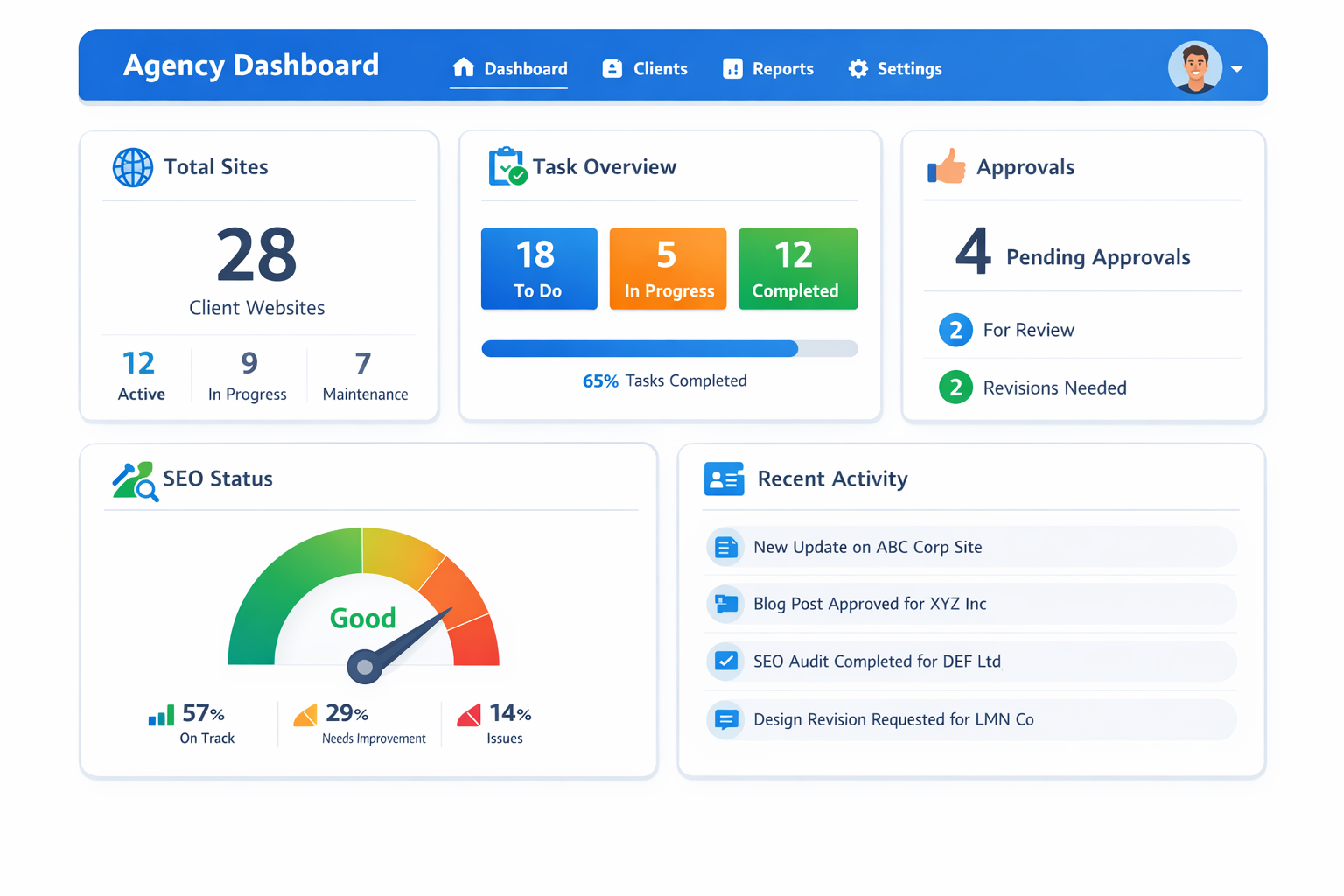
- Multi-site management: One dashboard for all your client sites
- Built-in AI generation: Create sites in minutes from a business description
- Client portal: Clients can request changes and see their site status
- Billing integration: Manage subscriptions under your brand
This isn't a side feature. It's the core of the platform.
Step 2: Pick Your Niche and Target Market
One of the biggest mistakes new web design business owners make is trying to serve everyone. Picking a niche is the fastest path to profitability.
Local Businesses (Restaurants, Dentists, Lawyers)
Local businesses are the most accessible market for new web designers. They desperately need websites, they have budgets, and they prefer working with someone local.
A restaurant needs a menu, hours, location, and online ordering. A dentist needs appointment booking, service descriptions, and patient testimonials. A lawyer needs practice area pages, contact forms, and credibility signals.
Each of these is a straightforward project that an AI website builder can handle beautifully. And local businesses tend to stay with their web designer for years, generating recurring revenue.
E-commerce Stores
E-commerce is more complex but more profitable. Online stores need product pages, shopping carts, payment processing, and inventory management.
The opportunity here is massive. Global e-commerce sales are projected to hit $8.1 trillion by 2026 according to Statista. Every one of those stores needs a website.
If you specialize in e-commerce, you can charge premium rates because the ROI for your clients is directly measurable.
Service Professionals (Coaches, Consultants, Real Estate)
Service professionals are another underserved market. Coaches, consultants, real estate agents, and therapists all need professional websites that build trust and generate leads.
These clients value:
- Clean, professional design that reflects their personal brand
- Lead generation forms and booking systems
- Testimonial and case study sections
- Blog or content capabilities for SEO
The AI website builder approach is perfect for this market because you can quickly generate a professional site that looks custom while keeping costs affordable.
Step 3: Select Your AI Website Building Platform
Your platform choice is one of the most important decisions you'll make. It determines what you can deliver and how much you can earn.
Comparing lindoai vs. Traditional Builders
| Feature | lindoai | Wix | WordPress | Squarespace |
|---|
| AI site generation | Yes, from description | Limited (ADI) | No | No |
| White label | Full | No | Manual setup | No |
| Multi-site management | Yes | No | Per-site | No |
| Built-in hosting | Yes | Yes | Third-party | Yes |
| Recurring billing | Included | Third-party | Third-party | No |
| Learning curve | Low | Low | High | Low |
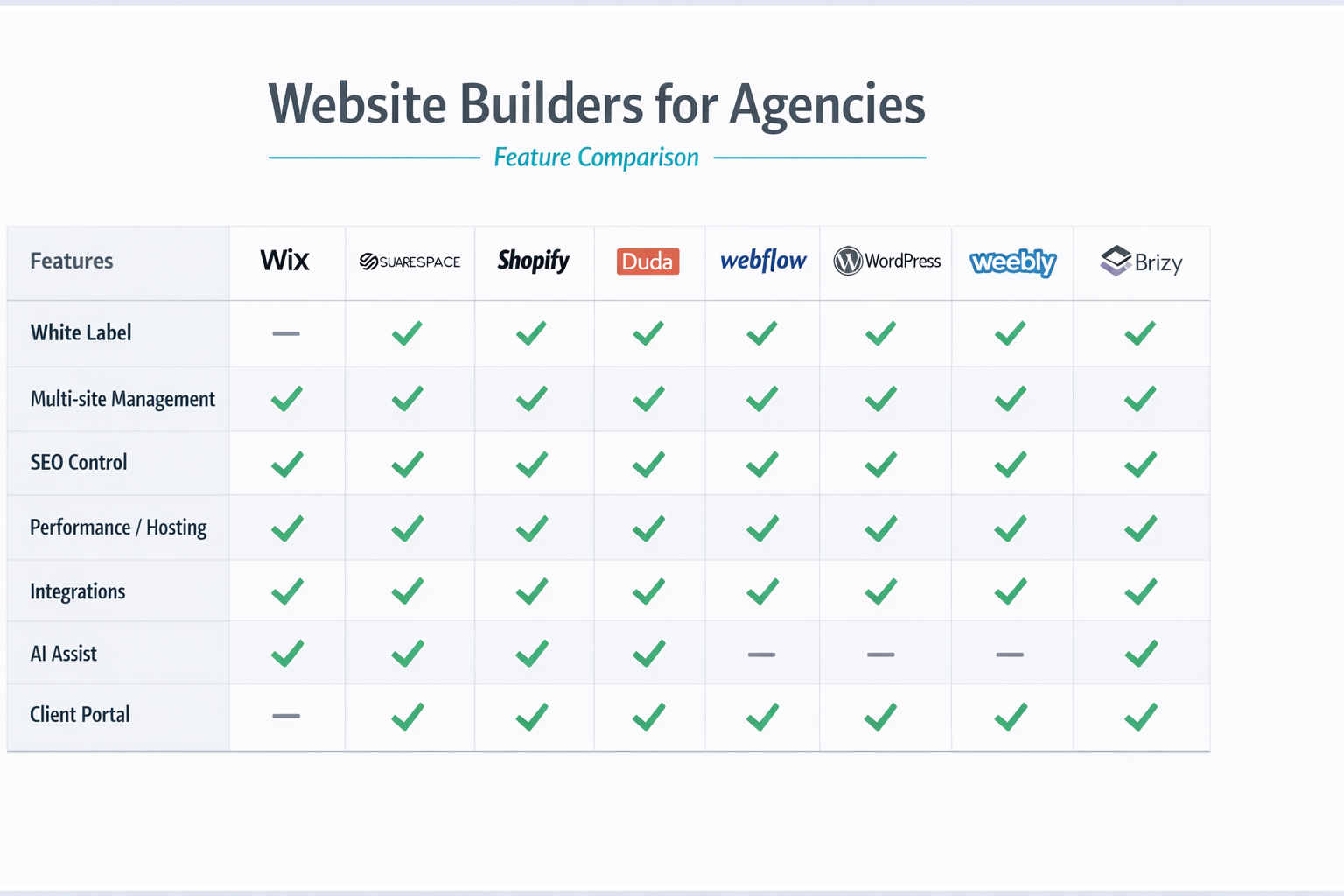
The key difference is white label capability. Wix, Squarespace, and WordPress all show their branding by default. With lindoai, every site you create is branded as yours from the start.
Why White Label Capabilities Matter for Agencies
White label isn't just about vanity. It's a business model decision. When you use a white label platform:
- Clients can't bypass you. They don't know the underlying platform, so they can't go directly to them.
- You own the relationship. Every interaction, every support ticket, every invoice happens under your brand.
- You build equity. Your agency brand grows in value over time. You can eventually sell it.
Traditional builders make you a middleman who can be cut out. White label platforms make you an essential partner.
Features to Look For
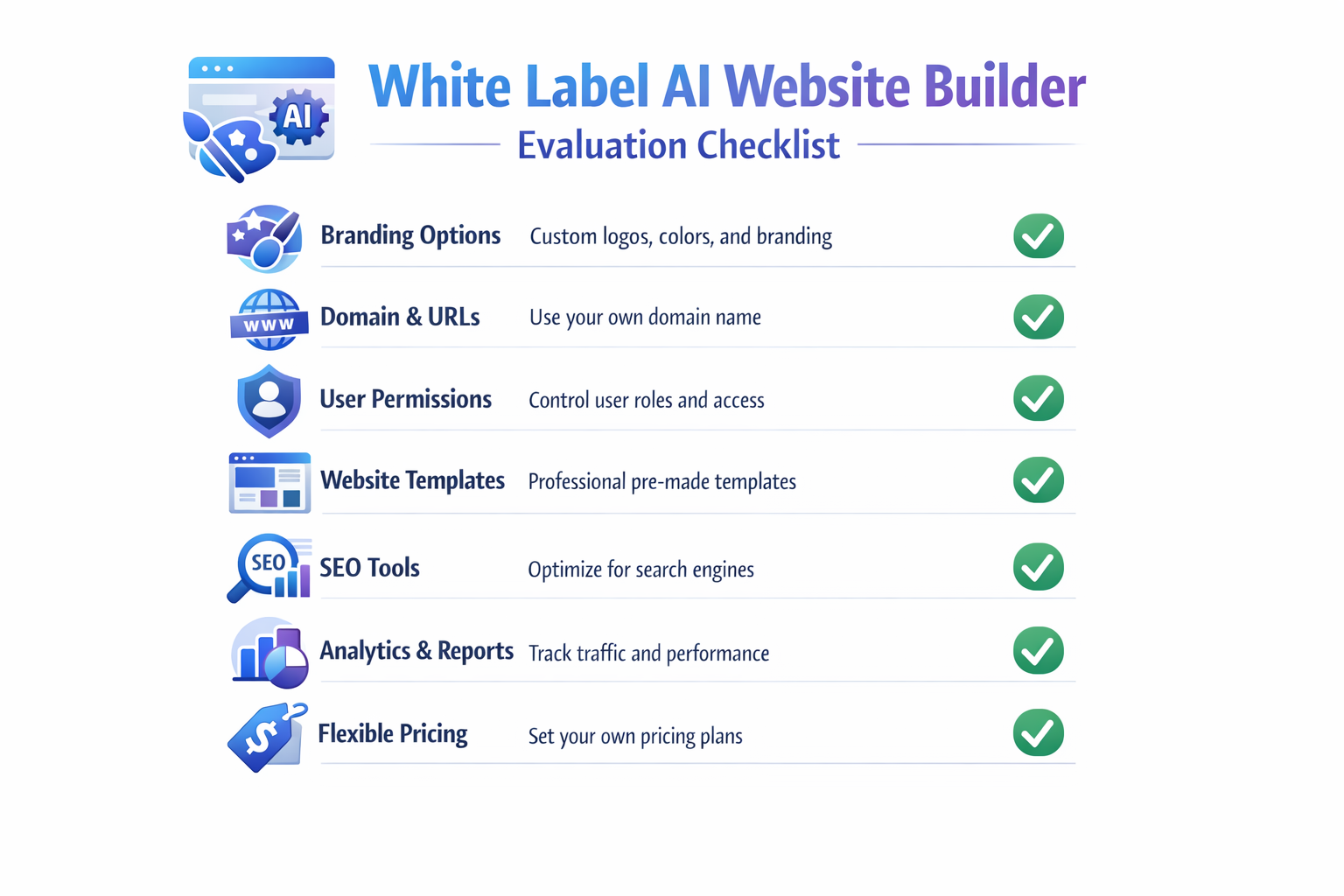
When evaluating platforms, prioritize:
- AI generation quality: Does it create sites that look professional and customized?
- White label depth: Can you completely remove the platform's branding?
- Multi-site management: Can you manage all client sites from one dashboard?
- Client billing: Can you charge clients under your own brand?
- Support and reliability: Is the platform dependable?
- Ongoing development: Is the platform actively improving?
For a deeper look at what makes a great platform for agencies, read the complete guide to white label website builders.
Step 4: Set Up Your Agency Brand
Your brand is the face of your business. It's worth investing time to get it right.
Creating Your Business Name and Brand Identity
Your business name should be memorable, easy to spell, and give some indication of what you do. Avoid generic names like "Web Design Pro." They're forgettable and hard to rank for.
Think about what makes you different. Do you specialize in a specific industry? Do you use a particular approach? Does your name convey trust and professionalism?
Once you have a name, create a simple logo and brand color palette. You don't need to spend thousands on branding. A clean, professional logo from a service like Looka or Canva is sufficient to start.
Setting Up Your Own Agency Website (Built with AI)
Your own website is your most important sales tool. Build it on the same platform you'll use for clients. This serves two purposes:
- You demonstrate what you can deliver
- You learn the platform inside and out
Your agency site should include:
- Home page with your value proposition and services
- Portfolio page showing your best work (start with sample sites if you don't have clients yet)
- Services page with pricing and packages
- About page telling your story
- Contact page with a clear call to action
Build it with lindoai to showcase exactly what your clients will get.
Legal Structure and Business Registration
You need to make your business official. For most web design business owners, an LLC is the right choice. It protects your personal assets and gives you professional credibility.
The process varies by location but typically involves:
- Choosing a business name and checking availability
- Registering with your state or local government
- Getting an EIN (Employer Identification Number) from the IRS
- Opening a business bank account
- Getting business insurance (general liability and cyber liability)
Total cost: usually $100 to $500 depending on your location. It's money well spent.
Step 5: Build Your Service Packages
Your pricing determines your income. Don't undervalue yourself.
Pricing Models for AI-Built Websites
There are three common pricing models for web design services:
One-time project fee. You charge a flat fee to build the site, plus optional monthly hosting. Simple and straightforward. Clients like knowing the total cost upfront.
Monthly retainer. You charge a monthly fee that includes the initial build plus ongoing maintenance. This generates recurring revenue and aligns your incentives with the client's long-term success.
Per-page pricing. You charge per page or per section. Less common but works for simple sites where clients want to start small and add pages over time.
The most profitable model combines an upfront build fee with a monthly retainer for hosting, maintenance, and updates.
What to Charge for AI-Built Websites in 2026
Here are realistic price ranges based on market research:
| Package | Build Fee | Monthly Retainer | What's Included |
|---|
| Starter | $499 | $49/mo | 5-page site, contact form, basic SEO, hosting |
| Professional | $999 | $99/mo | 10-page site, blog, booking system, advanced SEO |
| Enterprise | $1,999 | $199/mo | Unlimited pages, e-commerce, custom features, priority support |
These prices are competitive for the market while leaving you excellent margins, especially since the AI platform handles most of the technical work.
Creating Tiered Packages
Package tiers work because they give clients options at different price points. The key is to make the middle package the most attractive option.
Your $999 Professional package should offer significantly more value than the Starter, while your $1,999 Enterprise package should feel like the premium option for serious businesses.
Each package should clearly answer: "What do I get for this price?"
Step 6: Find Your First Clients
This is the hardest step for most people. Here's how to get your first clients without a portfolio, cold calling thousands of strangers, or working for free.
Cold Outreach Strategies That Work
Cold email and LinkedIn outreach are the most reliable ways to get your first clients if you don't have a network yet. The key is personalization at scale.
For local businesses, a simple script like this works:
"Hi [Name], I noticed [Business Name]'s website could use an update. I specialize in building modern, mobile-friendly websites for [industry] businesses. Would you be open to a 10-minute call to share a few ideas?"
Keep it short. Focus on the value you provide, not the technology you use.
Local Networking and Referrals
Local networking is underrated. Join your local chamber of commerce, attend business networking events, and introduce yourself to other business owners.
Referrals are the best source of clients. Offer a referral bonus. Ask every happy client to introduce you to two other business owners. A small incentive goes a long way.
Freelance Platforms for Initial Clients
Platforms like Upwork and Fiverr can help you land your first few clients, even without a portfolio. The competition is fierce, but you can stand out by:
- Focusing on a specific niche (e.g., "I build websites for yoga studios")
- Offering a fixed price for a specific deliverable
- Showing AI-generated samples relevant to the client's industry
Use these platforms to build case studies and testimonials, then graduate to higher-paying direct clients.
Building a Portfolio with Your First 3-5 Sites
Your first few projects might be discounted or even free. That's okay. You're building proof that you can deliver.
For each project, document:
- The before and after (if applicable)
- The client's feedback
- Key metrics (traffic increase, leads generated, etc.)
- Screenshots of the final site
After 3 to 5 completed projects, you have a portfolio that justifies full pricing.
Step 7: Deliver Websites Fast with AI
Once you have clients, delivery speed is your competitive advantage. AI lets you deliver faster than traditional agencies while maintaining quality.
Using lindoai to Create Client Sites in Hours
Here's the workflow for each client project:
- Discovery call: Understand their business, goals, and preferences (1 hour)
- AI generation: Describe the business in the platform and generate the initial site (30 minutes)
- Customization: Adjust design, add content, integrate features (2-4 hours)
- Client review: Share a preview link for feedback (1 hour)
- Revisions: Make changes based on feedback (1-2 hours)
- Launch: Connect domain, finalize SEO, publish (30 minutes)
Total: 6 to 10 hours per client site. Compare this to the 40 to 80 hours a traditional agency needs, and you see the power of this model.
White Labeling: Clients See Your Brand, Not the Platform
With lindoai, every client site shows your brand. The login portal has your logo. The emails come from your domain. The support is handled through your brand.
This is crucial for client retention. If your client ever thinks their site runs on a platform they could use directly, they might question why they're paying you. With full white label, they never see the platform. They only see your agency.
Scaling to 10+ Sites Per Month
Once you have a repeatable process, scaling is about systemizing and delegating.
The model works like this:
- You handle sales and client relationships (highest value activity)
- The AI platform handles site generation (core technology)
- A virtual assistant handles minor customizations and updates (after you train them)
With this system, you can comfortably manage 15 to 20 active clients while continuing to sell new projects. Your monthly recurring revenue builds steadily.
Step 8: Automate and Scale Your Agency
The goal isn't just to get clients. It's to build a business that runs without you.
Hiring Virtual Assistants and Junior Designers
Your first hire should be a virtual assistant to handle customer support and basic client requests. Your second hire could be a junior designer to help with customization.
The AI platform makes training easy because the workflow is consistent and the platform handles the technically complex parts.
Setting Up Recurring Maintenance Revenue
Recurring revenue is the holy grail of agency businesses. Every client you keep paying you monthly is worth 12x their monthly fee in annual recurring revenue.
Your maintenance packages should include:
- Hosting and infrastructure
- Security updates and backups
- Content updates (a set number per month)
- SEO monitoring and reporting
- Priority support
A client paying $99/month for maintenance generates $1,188 per year with almost no additional work after the initial build.
Upselling SEO, Hosting, and Content Services
Once a client trusts you with their website, they'll trust you with related services. Common upsells include:
- SEO packages: $200-500/month for ongoing optimization
- Content creation: Blog posts, copywriting, image creation
- Social media integration: Setting up and managing social channels
- Email marketing: Newsletters and automated campaigns
- Paid advertising: Google Ads or social media ad management
Each of these services has higher margins than web design itself.
Real Case Studies: How Agencies Built 6-Figure Businesses
The white label AI model isn't theoretical. Agencies are using it to build real, profitable businesses.
Case Study A: Local Focus Agency A solo founder in Texas targeted local real estate agents. He charges $999 for a 5-page site plus $79/month for hosting and maintenance. After 18 months, he has 47 clients and $44,000 in monthly recurring revenue. He works 25 hours per week.
Case Study B: Niche E-commerce Agency A founder in the UK specializes in AI-built Shopify stores for artisan food brands. She charges $2,500 setup plus $149/month. She has 22 clients and a team of 2 virtual assistants. Monthly revenue: $58,000.
Case Study C: Multi-Language Agency An agency in Canada targets immigrant entrepreneurs who need bilingual websites. Using lindoai's built-in multilingual support, they charge premium rates for sites in English and French. They have 30 clients at $199/month average: $71,000 monthly recurring revenue.
The pattern is clear: specialize, use AI for delivery, build recurring revenue.
Common Mistakes to Avoid
Learning from others mistakes is faster than making them yourself.
Underpricing Your Services
The most common mistake is charging too little. If you're charging $200 for a website, you're not building a business. You're building a low-margin side hustle that won't sustain you.
Price based on value, not time. An AI-built website saves your client time and money. Charge accordingly.
Not Specializing Enough
Generalists compete on price. Specialists compete on expertise. If you're "a web designer who builds websites," you're interchangeable with thousands of others. If you're "the go-to web designer for dental practices in Chicago," you're the obvious choice.
Choosing the Wrong Platform
Not all platforms support the white label agency model. Some platforms prohibit reselling in their terms of service. Some don't allow custom domains. Some don't support client billing.
Before you commit to a platform, verify that it supports the business model you want to build. lindoai is built specifically for white label agencies and supports all these requirements.
FAQ
How much money do I need to start a web design business?
You can start with as little as $100 to $500 for legal fees (LLC registration) and your first month's platform subscription. Compared to traditional businesses that require thousands in startup costs, web design is one of the most accessible businesses to launch.
Do I need coding skills to start a web design business?
No. Modern AI website builders let you create professional sites without writing a single line of code. The skills that matter are sales, client communication, and project management.
How many clients do I need to make a full-time income?
If you charge $999 per site with $99/month maintenance, you need about 10 to 15 clients to replace a $50,000 annual income. With 20 to 30 clients, you're earning six figures. Most agencies reach this within 12 to 18 months.
Is white label web design profitable?
Yes, extremely. Your costs are the platform subscription (typically $29-99/month) and your time. Your revenue is $500 to $3,000 per site plus recurring monthly fees. Margins are 70% to 90% after the platform cost.
How do I find my first web design client?
Start with local businesses you already interact with. Offer a discount to your first 3 clients in exchange for testimonials and case studies. Use cold email targeting a specific niche. Join local business networking groups. The first client is always the hardest. After that, referrals fuel your growth.
Can I build a web design business as a side hustle?
Absolutely. Many successful web design agencies started as side projects. You can take on 1 to 2 clients per month while working a full-time job. Once your monthly revenue exceeds your current salary, go full-time.
Conclusion
Starting a web design business in 2026 is easier and more accessible than ever. With AI handling the technical work and white label platforms enabling you to deliver under your own brand, the path from zero to a profitable agency is clearer than ever.
The key steps are simple: choose your niche, pick the right platform, set up your brand, price your services properly, and find your first clients. Each step builds on the last.
The opportunity is real. Millions of businesses need websites, and most would rather work with a partner than build it themselves. That partner can be you.
Ready to start your web design business? Try lindoai and see how fast you can build and deliver professional websites under your own brand.