How to Resell White Label Website Builders: A Step-by-Step Guide
You can build a real business reselling websites without writing a single line of code. That sounds like a claim straight out of a late-night infomercial, but it's exactly what a website builder reseller white label model lets you do: you sell websites under your own brand, and the platform handles the software, hosting, and infrastructure.
Here's the thing. The demand is massive. Small businesses everywhere still need websites, and most of them don't care how the sausage is made. They want a professional online presence, a partner they trust, and a fair price. That's where you come in.
In this guide, I'll walk you through how to resell white label website builders from start to finish: what the model actually is, why it works, the exact steps to launch, how to price your services, and how to find clients. By the end, you'll have a complete playbook, not just theory.
What Is a Website Builder Reseller White Label Model?
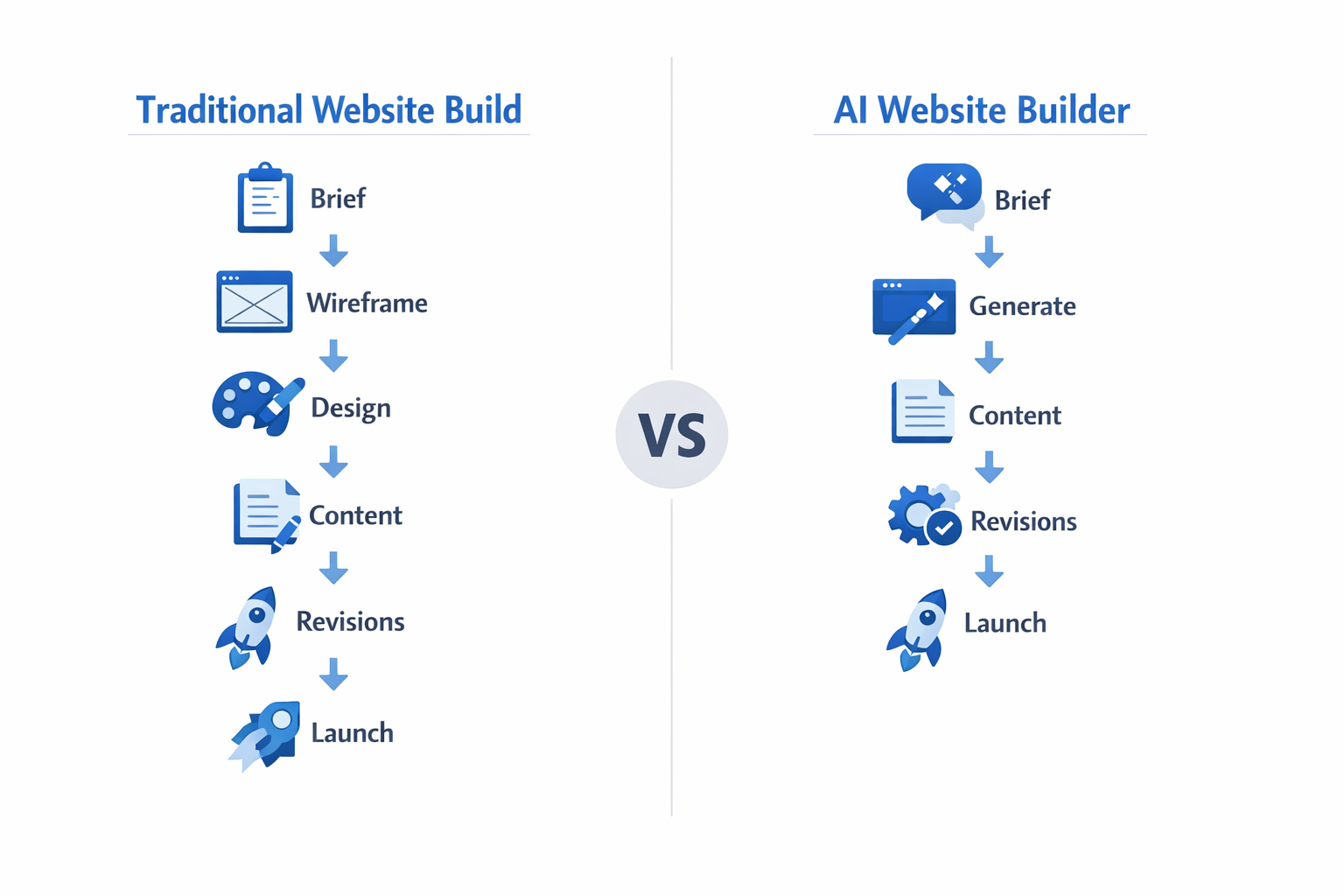
Before we get into the how, let's nail down the what. A white label website builder is a platform that lets you build and manage websites for clients while the platform stays invisible in the background. Your clients never see the platform's name. They see your brand, your logo, your domain, and your support.
When you resell that platform, you're not just using it for your own projects. You're acting as a reseller: you buy access at a wholesale rate, package it into your own offers, and sell it to clients at a markup. Think of it like a distributor model for websites.
The Reseller Model Explained
The mechanics are simpler than most people expect. Here's how the flow works:
- You subscribe to a white label platform with reseller capabilities, like lindoai.
- You build client sites under your own brand, using the platform's AI tools, templates, and hosting.
- You deliver the finished site to the client, often with a monthly management plan.
- You collect the payments, and your cost is the platform subscription, not a per-project license.
The key difference from a regular website builder subscription is that a reseller plan gives you multi-client management, client billing tools, and full branding control. You're running a software business, not just a design service.
A reseller is not a freelancer who builds sites. A reseller is a technology provider who owns the client relationship, the brand, and the recurring revenue. That distinction changes everything about how you price, sell, and scale.
White Label vs. Affiliate vs. Agency
People mix up these three models all the time, and it costs them money. Here's the difference in plain terms:
| Model | What you do | Who owns the client | Revenue |
|---|
| Affiliate | Promote a platform and earn a commission on signups | The platform | One-time or recurring commission, usually 20-40% |
| Referral partner | Send leads to an agency or platform | The other business | Flat referral fee or small commission |
| Reseller | Build, brand, and deliver sites yourself | You | Your full margin on every project and retainer |
| Traditional agency | Hire designers and developers to build custom sites | You | High project fees, but high overhead |
The affiliate model is fine for pocket money. The reseller model is a business. When you resell, you control the pricing, the relationship, and the long-term value. That's why agencies and freelancers who want predictable income keep gravitating toward reselling.
Why the Reseller Model Works
Let's be honest: the web design market is crowded. But the reseller model has structural advantages that keep it profitable even in a competitive landscape. The global web design services market is projected to reach $92.06 billion by 2030, according to Digital Silk's analysis of web design statistics. There is no shortage of demand; there's a shortage of efficient delivery.
Recurring Revenue and Margins
The single biggest reason to become a white label website reseller is recurring revenue. A one-off project pays you once. A website under management pays you every month, and that's where the real money lives.
Let's run the numbers. A typical client site might cost you $9 to $20 per month in platform fees on a reseller plan. You can charge that same client $50 to $150 per month for hosting, maintenance, updates, and support. That's a 70% to 90% gross margin, month after month.
Even better: the web design agency market itself keeps growing. Statista projects the web design services market to show steady annual growth through 2029. You're riding a tailwind, not fighting a headwind.
No Dev Team Required
Here's the part that surprises people: you don't need a developer. You don't even need to be a designer. Modern white label platforms use AI to generate complete websites from a short description of the business.
That means your cost structure collapses. No salaries, no contractors, no hourly billing drama. A traditional agency needs a project manager, a designer, and a developer to deliver one site. You need yourself and a platform subscription.
Ownership of the Client Relationship
There's a quieter advantage that matters more than the money: you own the client. In an affiliate model, the platform owns them. In a referral model, the other agency owns them. As a reseller, every client is yours, and that means every future upsell is yours too.
A satisfied client will eventually need a redesign, an online store, a booking system, or a marketing site for a new location. Those are all future projects that flow to you automatically because you already have the relationship. Over time, the value of your client list compounds far beyond any single project fee.
The reseller model inverts the agency economics. Instead of trading hours for dollars, you trade a subscription for a portfolio of client sites, each generating predictable monthly income.
How to Resell White Label Website Builders: Step by Step
Now for the part you actually came for: the step-by-step process. I've broken this into five steps that take you from zero to a functioning reseller business. Follow them in order and you'll avoid most of the mistakes new resellers make.
Step 1: Choose a White Label Platform
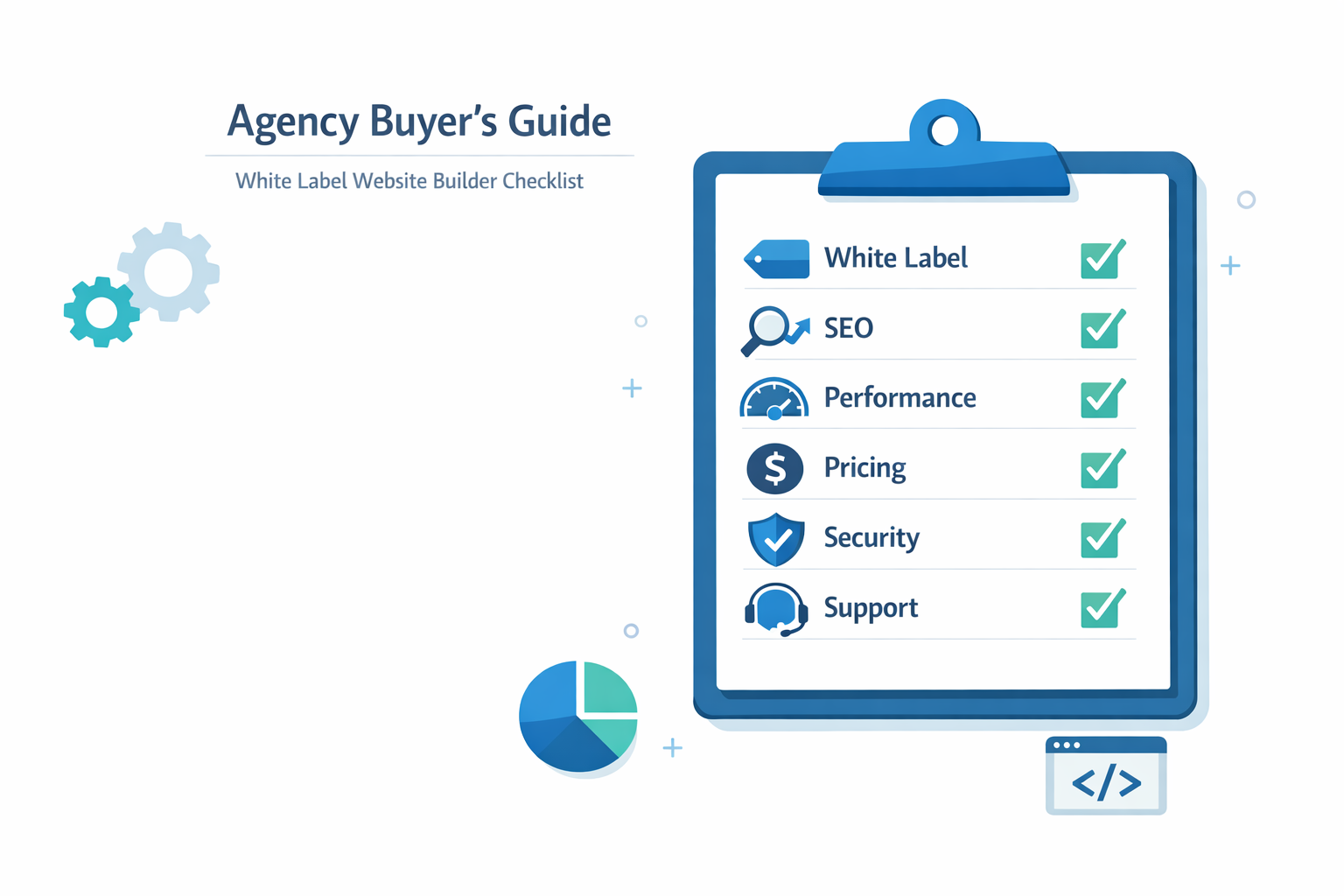
Your platform is the engine of your whole operation, so this decision matters more than any other. You're looking for five things:
- True white label: Your brand replaces the platform's brand in the client dashboard, emails, and billing.
- Multi-client management: A single dashboard where you can manage dozens of client sites.
- AI generation: The ability to create a professional site from a brief in minutes, not weeks.
- Reliable hosting and security: Managed hosting, SSL, backups, and updates handled for you.
- Scale that doesn't break your margin: A plan that keeps per-site costs low as you grow.
A platform like lindoai checks all these boxes. It's built specifically for agencies and resellers, with white label branding, AI site generation, and website management tools designed for recurring revenue.
Step 2: Set Up Your Brand and Pricing
Once you have a platform, it's time to look like a real company. This is where most new resellers trip up: they use their personal name, a free Gmail address, and no consistent branding. You can't charge premium prices looking like a hobby.
Here's your setup checklist:
- Register a domain that matches your business name.
- Set up a professional email on that domain.
- Create a logo and a simple brand kit (colors, fonts, tone of voice).
- Write your service packages with clear names, prices, and deliverables.
- Prepare a one-page proposal template you can reuse for every client.
Then decide on pricing. I'll go deep into pricing and margins in the next section, but the principle is simple: charge for outcomes, not hours. A client doesn't buy "10 hours of design work." They buy "a website that brings me leads."
Step 3: Build Your Client Intake Process
A professional intake process makes you look established and saves you hours of back-and-forth. Design it once, then reuse it for every client.
Your intake should include:
- A discovery form: Business name, industry, goals, examples of sites they like.
- A kickoff call or questionnaire: Dig into their target customers, services, and must-have pages.
- A proposal: Your recommended package, timeline, and monthly plan.
- A simple contract: Scope, deliverables, payment terms, and maintenance terms.
- An onboarding email: What happens next, what you need from them, and when they'll see a first draft.
The beauty of AI-powered white label platforms is that the gap between "client answers the form" and "client sees a draft site" can be measured in hours, not weeks. That speed is your competitive weapon.
A practical tip: set expectations early about what the client needs to provide. Content, photos, and logos are the usual bottleneck in any website project. If you collect those during intake instead of chasing them later, your delivery timeline stays honest and your client stays happy.
Step 4: Deliver and Maintain Sites
Delivery is where you build trust, and maintenance is where you build wealth. Let's handle both.
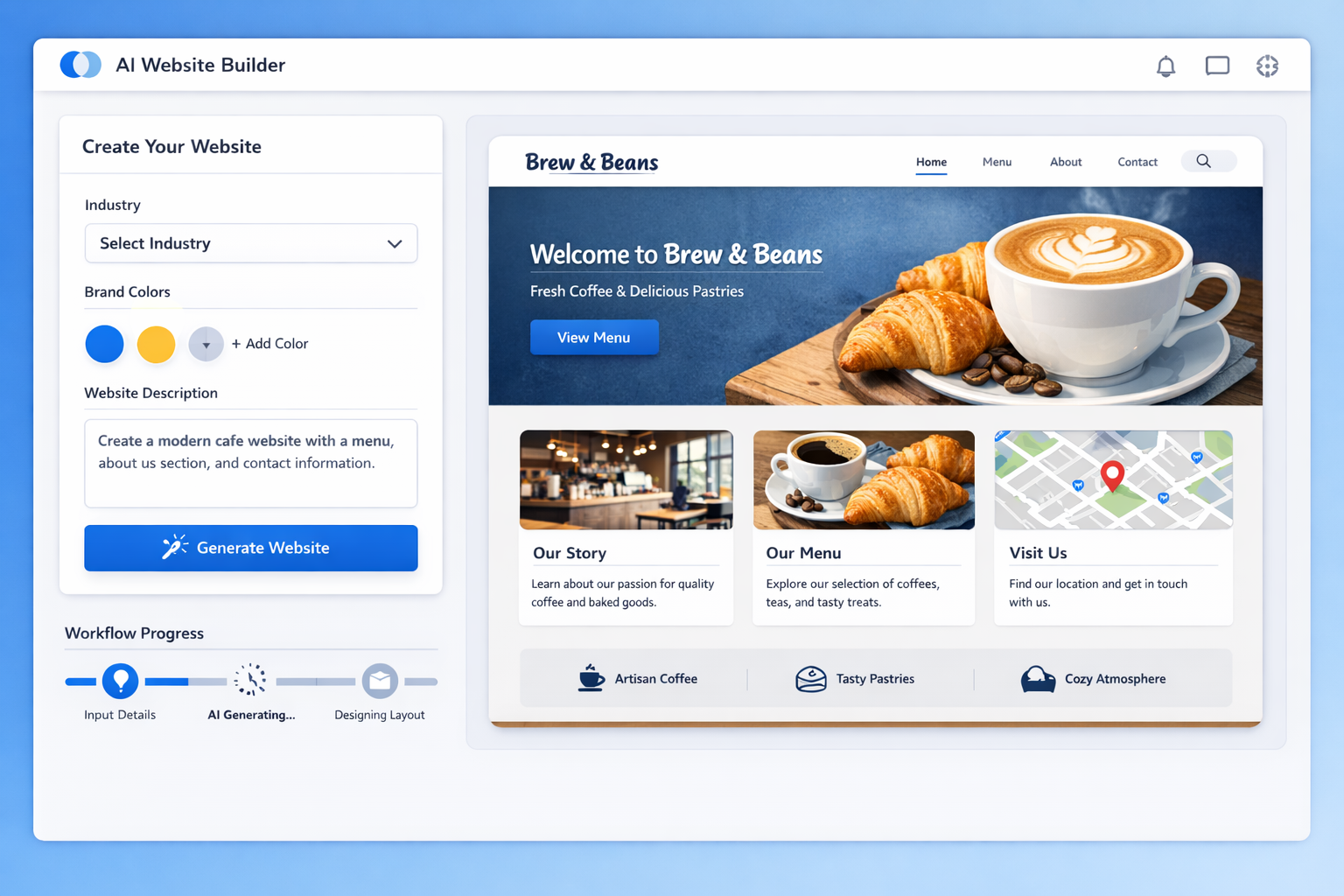
For delivery, follow a consistent workflow: generate the AI draft, customize it to the client's brand, add their real content, optimize the pages for local SEO, and walk them through a review round. Most clients will have one or two rounds of feedback, then you launch. With a good platform, a standard business site can go from brief to live in under two weeks, and often in a few days.
For maintenance, sign every client up for a monthly plan. This is non-negotiable if you want recurring revenue. Your plan should include:
- Hosting and domain management
- Security updates and backups
- Content updates (a set number per month)
- Monthly performance check
- Priority support
One more thing: don't let maintenance become a black box. Send each client a short monthly summary showing what you updated, how the site performed, and what you recommend next. That simple habit turns a commodity service into a relationship, and relationships are what keep clients paying for years.
Step 5: Scale With Templates and Automation
Once you've delivered a few sites, you'll notice patterns. Restaurants need menus and reservations. Tradespeople need service pages and reviews. Dentists need booking and trust signals. Capture those patterns as templates.
Most white label platforms let you save templates and brand kits. Build a template for each industry you serve, and your delivery time drops to a fraction of the first project. You can then add clients without adding hours, which is the entire point of the model.
Automation is your other lever. Use the platform's built-in tools for client billing, and automate your reminders, onboarding emails, and monthly check-ins. Every hour you automate is an hour you can spend on sales.
Pricing and Margins for Resellers
Let's talk money, because this is where the reseller model gets genuinely exciting. The margin math is what separates reselling from every other web service business.
How to Price Your Services
There are two revenue streams in a reseller business, and you need both.
One-time setup fees. This covers the initial build. Depending on your market and package, a setup fee can range from $500 for a basic site to $3,000+ for a multi-page business site with copywriting and SEO setup. Don't undersell here; this is your project revenue.
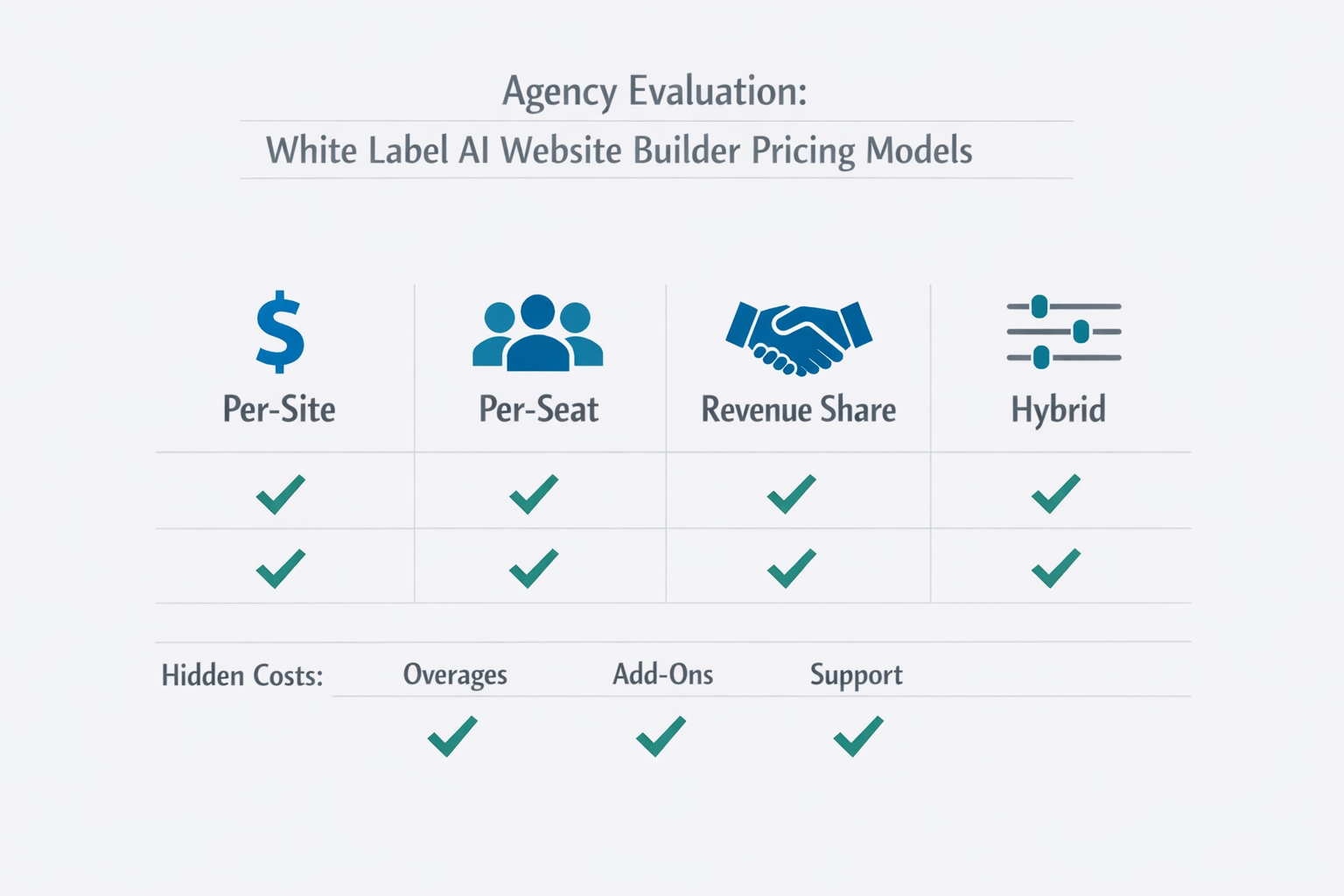
Monthly management fees. This is your recurring revenue. Common pricing tiers look like this:
| Package | Setup fee | Monthly fee | What's included |
|---|
| Starter | $500 | $49/mo | 1-3 page site, hosting, basic updates |
| Business | $1,200 | $99/mo | Multi-page site, SEO setup, content updates, support |
| E-commerce | $2,500 | $199/mo | Online store, product setup, monthly maintenance |
These numbers are realistic for the US and UK markets. Adjust them for your local market, but don't be afraid to charge premium rates. Your cost per site is tiny, so your pricing is about perceived value, not your costs.
Profit Calculator Example
Let's build a concrete example so you can see the model in action. Say you're on a white label plan that costs you $297 per month and includes, on average, $15 per site in variable costs for 20 client sites.
- Revenue: 20 clients × $99/month average = $1,980/month
- Platform cost: $297/month + $300 variable = $597/month
- Gross profit: $1,383/month from recurring revenue alone
- Plus one-time setups: If you onboard 3 new clients a month at $1,200 average setup, that's another $3,600/month
Suddenly you're looking at $5,000/month in revenue from a business you can run from a laptop. That's the math that makes reselling so attractive. HubSpot's research on agency retainers and pricing consistently shows that retainer-based models produce more predictable revenue than pure project billing.
Your real product isn't the website. It's the ongoing relationship. The setup fee pays for the build; the retainer pays for the business.
Finding Clients as a Website Reseller
You can have the perfect setup and the best margins in the world, but without clients, it's all theoretical. Let's talk about how resellers actually win clients.
Positioning and Offer
Your positioning should answer one question: why should a small business pay you instead of using a DIY builder or hiring a generic agency?
Your answer is speed, professionalism, and ongoing care. The DIY builder leaves them alone with a half-finished template. The generic agency charges a fortune and disappears after launch. You deliver a polished site fast and stay around to maintain it.
Make your offer concrete. Instead of "I build websites," say "I build and manage websites for local restaurants, including online menus, reservations, and Google visibility, from $99 a month." Specific beats generic every time.
Outreach and Referrals
Here's the outreach playbook that works for resellers:
- Local businesses with weak sites: Search your area for businesses with outdated websites, then send a short, personalized email showing what their site could look like.
- Referral partnerships: Team up with copywriters, SEO freelancers, and social media managers who need a web partner for their own clients.
- Your existing network: Tell everyone you know what you do. The first clients for most resellers come from people they already know.
- Reviews and case studies: After every successful launch, ask for a testimonial. Social proof is your cheapest marketing channel.
One honest note: client acquisition is the hardest part of any service business. But because your delivery costs are so low, you can afford to be patient and consistent with outreach while your recurring revenue builds a foundation.
A Simple Client Pitch That Works
If you're not sure what to say to a prospect, here's a framework that converts well. Open with a specific observation about their current site, not a generic compliment. Then show the gap between where they are and where they could be. Then present your package as the bridge.
For example: "I noticed your site doesn't show up on mobile properly and your Google listing links to an outdated page. I can rebuild your site with a modern design and get your business visible in local search, starting at $99 a month including hosting and updates."
That pitch works because it's specific, it names a real problem, and it gives a clear price. You can adapt it to any industry by swapping in the details that matter to that business.
Common Mistakes to Avoid as a Reseller
Every model has traps, and reselling is no exception. Here are the ones I see most often, so you can skip them.
Mistake 1: Competing on price. If you're the cheapest option, you attract the worst clients. Price on value and results, and let the low-end market go to the DIY builders.
Mistake 2: Skipping the contract. A handshake deal on a website with ongoing maintenance is a recipe for scope creep. Always have a written agreement covering deliverables, payments, and what's included in the retainer.
Mistake 3: Ignoring data ownership. Before you commit to any platform, confirm you can export your client sites. You don't want to be locked in with no exit. A reputable white label provider lets you keep what you built.
Mistake 4: Doing everything manually. If you're manually invoicing, manually updating every site, and manually answering the same questions, you're burning the margin you built. Automate whatever the platform can automate.
Mistake 5: Forgetting the monthly touchpoint. Clients churn when they feel forgotten. A quick monthly report, even a short email, dramatically reduces churn and opens upsell opportunities.
Mistake 6: Taking on every client. Not every prospect is a good fit. If a client wants a $200 website, wants it tomorrow, and argues about every detail, they will cost you more than they pay. Learn to say no politely and raise your minimum. The reseller model works best when you serve a clear type of client at a sustainable price.
Mistake 7: Neglecting SEO from day one. A beautiful site that nobody can find is a failed deliverable. Build basic local SEO into every package: optimized titles, meta descriptions, Google Business Profile setup, and a simple keyword plan per page. This is what makes your sites actually valuable to clients, and it's one of the strongest arguments for choosing you over a DIY builder.
Why lindoai for Resellers
You've probably noticed I keep coming back to lindoai, and that's deliberate. It's built for exactly this business model.
White Label Website Builder Capabilities
lindoai gives you full white label control: your brand on the client dashboard, your logo, your domain, your emails. Clients interact with your company, not with lindoai. For a reseller, that's not a nice-to-have; it's the whole game. You can see the details on the white label website builder page.
Website Management for Recurring Revenue
The platform includes website management tools designed for retainers: multi-client dashboards, billing, and maintenance features. Instead of patching together five different tools, you run your whole reseller operation from one place. That consolidation is what keeps your costs low and your margins high.
How AI Accelerates Production
The AI engine generates a complete site from a short description in minutes. That's the difference between delivering one site a month and delivering four. You can also connect lindoai to AI assistants through MCP integrations, which means your own AI workflow can create and update client sites on command.
Let's put that in practical terms. A traditional agency might spend 40 to 80 hours building a custom site from scratch. With an AI-powered white label builder, the first draft is ready in minutes, and the remaining work is customization and content. That's the difference between a project that eats your week and a project that fits in an afternoon.
What a Reseller Actually Pays
To make the lindoai example concrete, here's what the cost structure looks like. The starter plan is $29 per month, which suits freelancers building their first few sites. The white label plan for agencies and resellers is $297 per month, and with annual billing you get up to 30 percent off.
When you spread that across an active portfolio, the per-site cost becomes almost trivial. Run 20 client sites on the white label plan and you're looking at roughly $15 per site per month in platform cost, while charging clients $99 or more. That gap is your margin, and it's the whole business model in one sentence.
For a deeper look at how resellers and agencies structure their offers, check out our guide on starting a white label reseller agency and the full white label website builder guide. If you're at the very beginning of building your business, our guide to starting a web design business covers the fundamentals.
Frequently Asked Questions
How do I resell white label website builders?
You subscribe to a white label platform with reseller features, then build and sell websites under your own brand. The typical flow is: choose a platform, set up your brand and pricing, build a client intake process, deliver sites, and charge monthly management fees. You pay a subscription plus a per-site cost, and you keep everything you charge clients.
What is the best white label website builder for resellers?
The best platform depends on your needs, but the essentials are true white label branding, multi-client management, AI site generation, and managed hosting. lindoai is designed specifically for resellers and agencies, which is why it's our recommendation, but compare a few options and test the client dashboard before you commit. Always check data export options before signing up.
How much can I earn reselling websites?
Earnings vary by market and effort, but the model supports serious income. With 20 clients on a $99/month average plan, you're looking at about $1,980/month in recurring revenue before costs, plus one-time setup fees that can add thousands per month. Resellers who build a client base and automate delivery regularly reach $5,000 to $15,000+ per month.
Do I need technical skills to resell websites?
No. That's the point of the white label reseller model. The platform handles hosting, security, updates, and the technical infrastructure. AI tools handle most of the design and content generation. You need business skills: selling, communicating with clients, and managing projects. Those are learnable, and they matter far more than code.
Is reselling white label websites profitable in 2026?
Yes, and the economics are actually improving. AI has collapsed the cost of production, while demand for small business websites keeps growing. Your gross margins on managed sites are typically 70% to 90%, which is higher than most service businesses. The main risk isn't the model; it's inconsistent client acquisition, which is why the outreach playbook in this guide matters.
How long does it take to launch a reseller business?
You can go from decision to first client in about a month. Week one is platform selection, branding, and pricing. Week two is building your intake process and proposal template. Week three is outreach to your first prospects. Week four is delivery of your first site. The fastest way to learn the model is to sell your first two or three sites at a fair price, learn from the process, and raise your rates as your confidence grows.
Conclusion
Reselling white label website builders is one of the most accessible ways to build a real digital services business in 2026. You don't need developers, you don't need a big budget, and you don't need to compete on price. You need a solid platform, a clear offer, and the discipline to build recurring revenue.
Start with the fundamentals: pick a white label platform that gives you true branding control, define your packages and pricing, and set up a repeatable intake process. Then go find your first client, deliver an excellent site, and put them on a monthly plan. Every client you add makes the next one easier. If you want to resell white label website builders profitably, the playbook is simple: pick a platform with true white label control, package your services, and put every client on a monthly plan. The website builder reseller white label model rewards consistency, not genius, and the people who stick with it are the ones who win.
Ready to see how it works? Explore lindoai and check the pricing plans to find the reseller option that fits your goals. Your first white label client is closer than you think.