White Label Web Design: The Complete Guide for Agencies and Resellers
Every agency owner reaches a point where they ask the same question: how do I grow without constantly hiring more people? You have clients who need websites. You have the relationships. But you do not have the capacity to design and develop every site from scratch.
White label web design solves this problem. You sell websites under your own brand while a partner platform handles the actual building. The client sees you as their web design agency. The platform stays invisible. You keep the margin, control the relationship, and own the brand experience.
In 2026, white label web design has become even more powerful with the rise of AI website builders. These platforms let you generate complete, professional sites in minutes instead of weeks. The business model that once required a team of developers is now available to solo freelancers and small agencies.
How White Label Web Design Works
The white label model is simple. You partner with a platform that builds websites. Your clients pay you for web design services. You pay the platform a flat monthly fee. The platform creates and hosts the site, branded entirely as your work.
The Three Parties in the Model
White label web design involves three distinct roles. Understanding each one helps you see where the value lies.
The platform is the technology provider. This could be a traditional white label website builder or a modern AI platform like Lindo AI. The platform handles infrastructure, hosting, security updates, and the actual website generation. You never mention their name to your clients.
Your agency sits between the platform and the client. You do the sales, the client communication, the strategy, and the customization. You determine pricing, set timelines, and manage the relationship. Your brand is the only one the client sees.
The client pays you for a finished website. They do not know (or care) that a third party platform powers the delivery. They chose you for your expertise, your portfolio, and your trustworthiness.
White label web design is not about hiding something from your clients. It is about focusing your energy where it adds the most value: sales, strategy, and relationships. The platform handles the technical heavy lifting so you can focus on growth.
White Label vs Traditional Web Development
The difference between white label and traditional web development comes down to who builds the site and who owns the client relationship.
| Aspect | Traditional Development | White Label Web Design |
|---|
| Who builds the site | Your in-house team or freelancers | White label platform (invisible) |
| Client sees | Your agency | Your agency |
| Time to launch | 4-12 weeks | 1-7 days |
| Your upfront cost | Developer salaries, tools, software | Flat monthly platform fee |
| Scalability | Hire more people = more cost | Same platform, more clients |
| Risk | Hiring, onboarding, turnover | Platform subscription only |
Why Agencies Choose White Label Web Design
Agencies choose the white label model for one overwhelming reason: it lets them focus on what they do best.
If your strength is client relationships, sales, and strategy, white label frees you from the technical grind. You do not need to recruit developers, manage their timelines, or worry about code quality. The platform handles all of that.
If your strength is design, white label AI tools give you a starting point that is already high quality. You can spend your time on customization and fine tuning instead of building from zero.
If you are just starting out, white label removes the biggest barrier to entry: the need to know how to code. According to the Bureau of Labor Statistics, the median annual wage for web developers in the US is $83,240. That is a salary you do not need to pay because the platform does the development work.
The Rise of AI Powered White Label Solutions
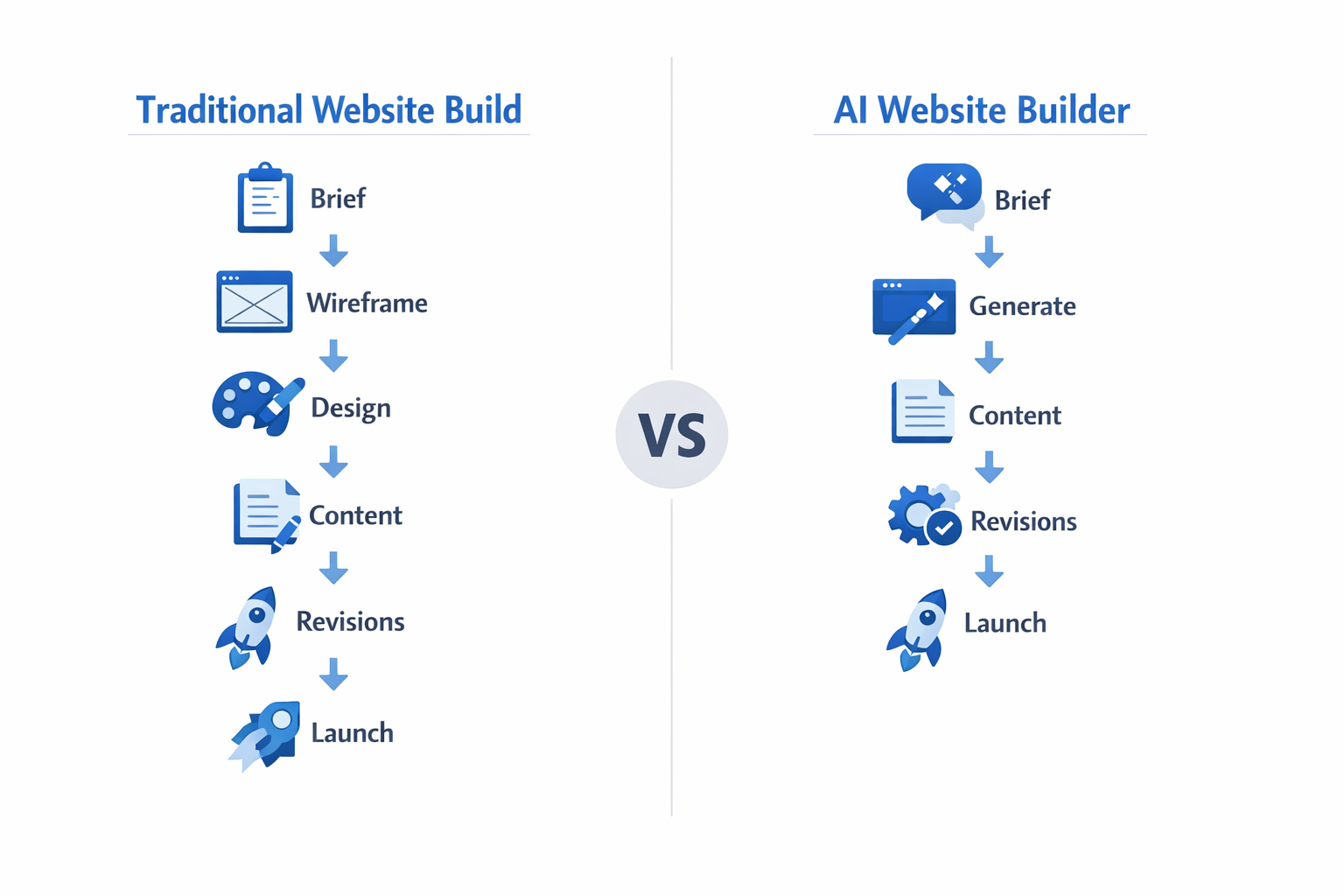
The real game changer in 2026 is artificial intelligence. Traditional white label platforms still require manual design work. You pick a template, customize it, and populate it with content. That process takes days or weeks per site.
AI powered platforms like Lindo AI change this completely. You describe the business to the AI, answer a few questions, and the platform generates a complete, professional website in under a minute. The AI handles layout, content, images, and SEO.
This shift matters because it changes the economics of white label web design. When a site takes two weeks to build, you can handle maybe two or three projects per month. When a site takes an hour to customize, you can handle twenty or thirty. The same platform subscription supports unlimited growth.
Benefits of White Label Web Design for Agencies
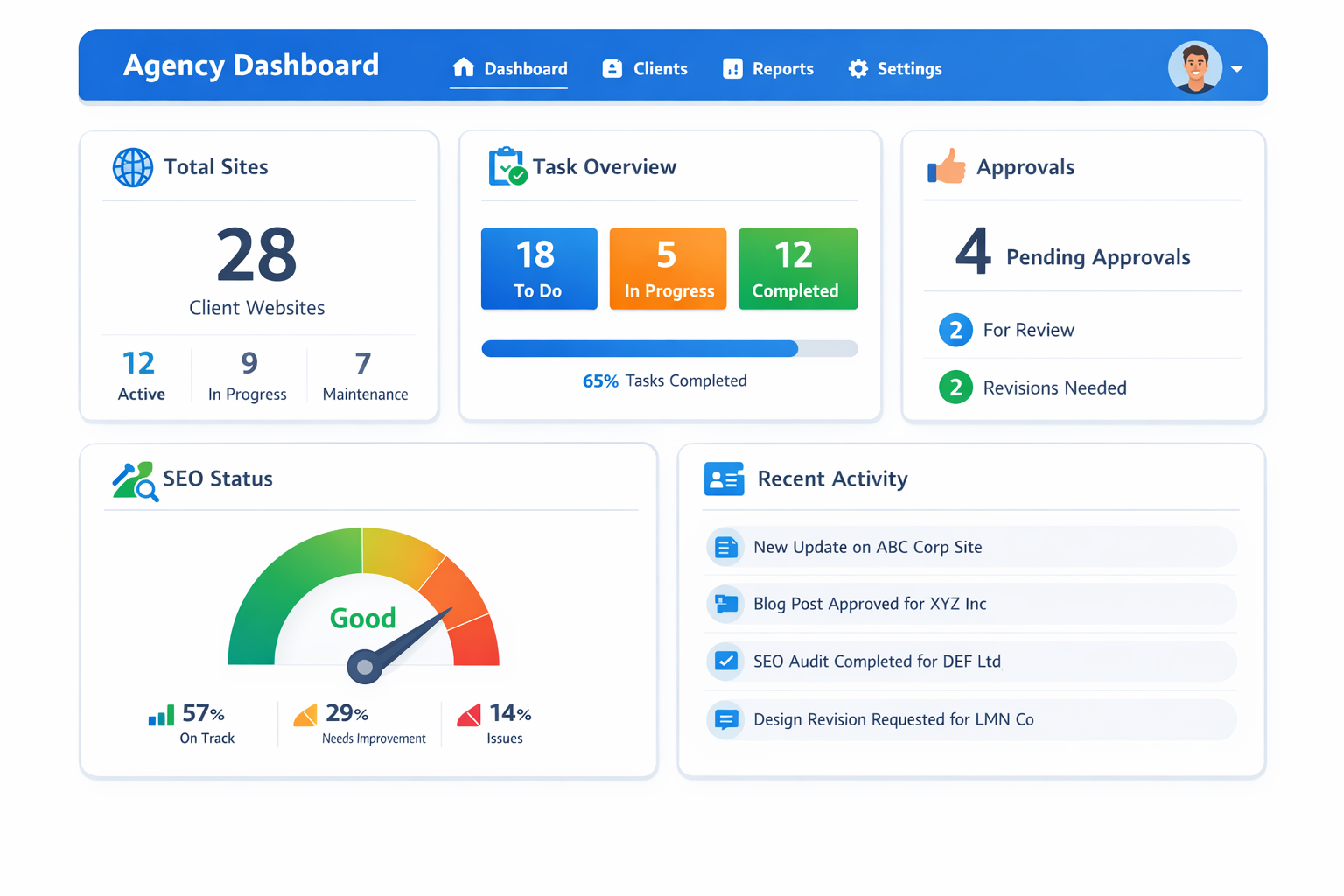
The white label model offers advantages that traditional agency growth cannot match. Let me walk through the most impactful ones.
No Hiring Needed
The single biggest cost for any agency is people. Salaries, benefits, training, and management overhead add up fast. A single full time developer costs you $50,000 to $100,000+ per year depending on your market.
With white label web design, you do not need developers. You do not need designers. You do not need project managers to coordinate between them. All of that is included in your platform subscription. You can start as a solo operator and immediately deliver professional results.
Scale From 1 to 50 Clients Without Overhead
Scaling a traditional agency means hiring in advance of revenue. You bring on a developer, pray that billable work materializes, and hope the math works out. One bad month and you are in the red.
White label flips this equation. Your platform cost is fixed regardless of how many clients you serve. Adding client number 50 costs you exactly the same as client number one. Your margin improves with every new client because your fixed costs stay flat.
A survey by Clutch found that 73% of small businesses plan to redesign their website within the next two years. That demand is there whether you build sites manually or use white label tools. The question is whether you can capture it efficiently.
Predictable Monthly Recurring Revenue
The best thing about white label web design is not the one time setup fee. It is the recurring revenue. Most white label platforms let you charge clients a monthly fee for hosting, maintenance, updates, and support.
Think about what that means for your agency. Each client you onboard adds a recurring revenue stream. After twelve months, if you have twenty clients paying $150 per month, that is $36,000 per year in passive, predictable income. And that is on top of your setup fees.
Recurring revenue transforms your agency from a project based business into a subscription business. Project based businesses have unpredictable cash flow. Subscription businesses have stability, predictability, and higher valuation multiples.
Launch Client Sites in Hours, Not Weeks
Speed is a competitive advantage. When a potential client talks to three agencies and you promise delivery in days while the others promise weeks, you win. Every time.
The data backs this up. According to Gartner, more than 60% of websites will be built with no code or low code tools by 2026. The market has already accepted that speed matters more than custom craftsmanship for most business websites.
With an AI white label platform, you can build a site, customize it, and deliver it in a single afternoon. That speed lets you take on more projects, iterate faster based on client feedback, and build a portfolio quickly.
Control Quality and Delivery Timelines
When you rely on freelance developers, you accept the risk that they might disappear, deliver late, or produce inconsistent quality. Every agency owner has a horror story about a developer who went silent during a critical project.
White label platforms eliminate this risk entirely. The quality is consistent because the technology is standardized. The delivery timeline is predictable because the generation process is automated. You control when to submit a project and when to deliver it.
The single biggest operational risk for a small agency is dependency on people you cannot control. White label web design replaces that risk with a predictable technology platform. That predictability is worth more than any feature list.
White Label AI Website Builder vs Traditional White Label
Not all white label solutions are created equal. The difference between traditional platforms and AI powered platforms is significant enough to affect your entire business model.
Traditional White Label: Design From Scratch
Traditional white label platforms like Duda, Wix White Label, and Webflow give you a template library and a drag and drop editor. You start from a template, customize colors and fonts, add content, and build page by page.
The problem is that this still takes time. A typical site built on a traditional platform takes 15 to 40 hours of work. That includes content creation, image selection, layout adjustments, and responsive testing. If you charge $2,000 per site, your effective hourly rate is $50 to $133 per hour. Not terrible, but not scalable either.
AI Powered White Label: Generate in Minutes
AI powered platforms take a completely different approach. Instead of templates, they use generative AI to create a unique site based on your description. You tell the platform what the business does, who the target audience is, and what tone you want. The AI generates a complete site with layout, content, images, and SEO.
Customization happens on top of a strong foundation rather than from a blank template. The time per site drops to 1 to 4 hours for customization and client refinement. Your effective hourly rate at $2,000 per site jumps to $500 to $2,000 per hour.
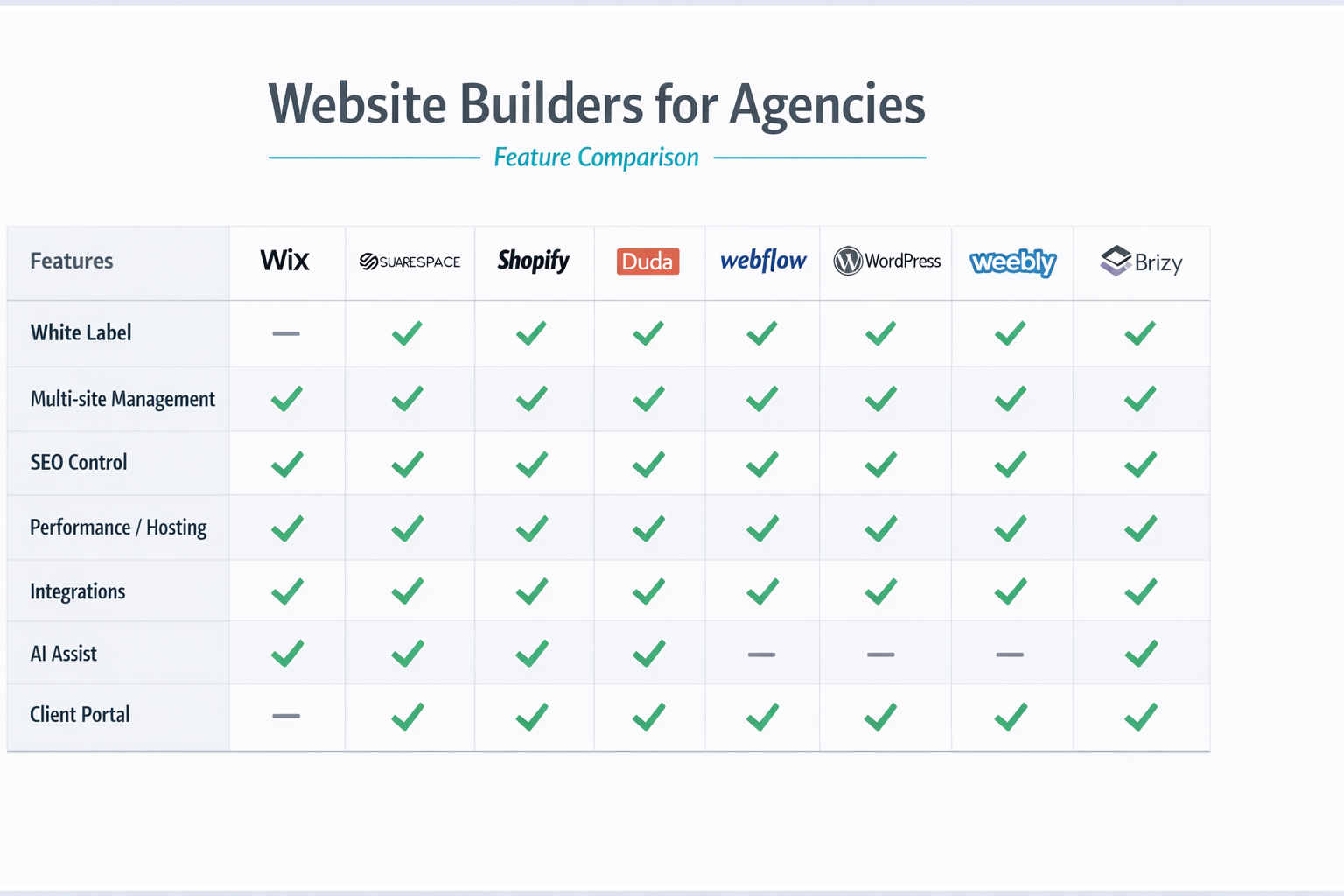
Feature Comparison: Lindo AI vs Duda vs Wix White Label
| Feature | Lindo AI | Duda | Wix White Label |
|---|
| AI site generation | Yes, from description | No | No |
| Full white label branding | Yes | Yes (higher tier) | Yes |
| Custom domain support | Yes | Yes | Yes |
| Client management portal | Yes | Yes | Limited |
| AI content writing | Yes | No | No |
| AI image generation | Yes | No | No |
| Time to first draft | Under 1 minute | 15-40 hours | 10-30 hours |
| Monthly cost (agency) | From $49 | From $39 (limited) | From $50 (limited) |
| Revenue share with platform | None | None | None |
| SEO optimization | AI powered auto | Manual | Manual |
Why AI Is the Future of White Label Web Design
The trend is unmistakable. Platforms that incorporate AI will dominate the white label market. Here is why.
First, AI reduces the skill barrier. You do not need to know design principles, color theory, or typography. The AI handles all of that based on best practices and millions of data points. Your job is to describe the business and fine tune the result.
Second, AI improves over time. Traditional platforms add features slowly through product updates. AI platforms improve every day as the models learn from more data. The quality of what you can deliver today is higher than it was six months ago, and it will be higher again in six months.
Third, AI enables personalization at scale. You can generate a unique site for each client without repeating work. The AI does not reuse templates. Every site is built from scratch based on the specific business description. Your clients get unique sites, not cookie cutter templates.
According to Forbes, 82% of companies are exploring or implementing AI in their web development processes. The agencies that adopt AI white label solutions now will have a head start that their competitors will struggle to close.
How to Choose a White Label Website Builder
Selecting the right platform is the most important decision you will make. The right choice accelerates your growth. The wrong choice locks you into a platform that limits your potential.
Key Features to Look For
Full rebranding. The platform must let you remove all of their branding and replace it with yours. This includes the editor interface, the client portal, email notifications, invoices, and the site footer. If the platform puts their name anywhere your client can see it, it is not true white label.
Custom domain support. Your client must be able to use their own domain name. The platform should handle SSL certificates automatically and support domain mapping without technical complexity.
Content management. Your client needs the ability to update their own content after launch. Look for a CMS that is simple enough for non technical users but powerful enough for basic edits.
AI capabilities. In 2026, a white label platform without AI is already outdated. AI generation, AI content writing, and AI image creation should be standard features.
Scalability. Can you create unlimited sites? Is there a per site fee or a flat subscription? Flat subscriptions are better for scaling because each new client adds pure profit.
Pricing Transparency and Costs
White label platforms typically charge either a flat monthly fee or a per site fee. Flat fees are better for agencies because they make your costs predictable.
| Platform Type | Typical Cost | Best For |
|---|
| DIY builder + white label addon | $39-79/mo + $10-20/site | Budget conscious startups |
| All inclusive white label | $49-199/mo flat | Scaling agencies |
| Enterprise white label | $300-1000+/mo | Large agencies with custom needs |
Be careful with hidden costs. Some platforms charge extra for SSL certificates, custom domains, client management features, or removing their branding. Read the fine print before committing.
Design Flexibility and Customization
How much control do you have over the final design? Some platforms are rigid. You choose a template and your customization options are limited to colors, fonts, and content replacement. Others give you full control over layout, spacing, animations, and interactions.
For most client work, a balance works best. You want enough flexibility to make each site feel unique, but not so much that you are effectively designing from scratch. The sweet spot is a platform that generates a strong AI designed foundation and then lets you customize every element.
SEO and Performance Capabilities
A beautiful website that nobody can find is worthless. Your white label platform must produce sites that are optimized for search engines and fast to load.
Look for automatic SEO features: meta title and description generation, heading structure, image alt text, schema markup, and XML sitemaps. The platform should handle these by default so you do not have to configure them manually for every site.
Performance matters for both user experience and Google rankings. According to Google, page speed is a direct ranking factor. Sites built on your platform should score 90+ on Google PageSpeed Insights without manual optimization.

Support and White Label Customer Service
When something goes wrong, your client contacts you. You need to be able to get support from your platform without revealing their involvement.
The best white label platforms offer dedicated support channels for agencies. This means priority response times, a direct contact person, and support that understands the white label model. Avoid platforms where you have to submit tickets through the same portal as end users.
Step by Step: Launching a White Label Web Design Service
Theory is useful. Execution is everything. Here is the step by step process to launch your white label web design service.
Step 1: Choose Your White Label Platform
Pick a platform that matches your goals. If you want maximum automation and AI capabilities, Lindo AI is the strongest option. If you prefer more manual control, Duda is a solid choice. Evaluate based on the criteria in the previous section.
Create an account and explore the platform before pitching to clients. Build a sample site for a fictional business to understand the workflow. Time yourself. Note what feels smooth and what feels clunky. Your efficiency on the platform will directly affect your profitability.
Step 2: Set Up Your Agency Brand and Pricing
Before you sell anything, you need to know what you are selling. Define your service packages clearly.
A simple three tier model works well:
Starter package at $999 includes a 5 page website, AI generated content, basic SEO, contact form, and 3 months of hosting. Best for small local businesses on a tight budget.
Professional package at $2,499 includes everything in Starter plus custom content writing, advanced SEO setup, Google Analytics integration, blog setup, and 12 months of hosting. Best for established businesses that want a serious online presence.
Premium package at $4,999 includes everything in Professional plus e-commerce functionality, custom integrations, ongoing maintenance, priority support, and dedicated account management. Best for businesses that need more than a basic site.
Step 3: Build a Portfolio of Sample Sites
Nobody buys web design services without seeing examples. You need a portfolio that demonstrates what you can deliver.
Build three to five sample sites for different types of businesses. A local restaurant. A real estate agent. A dental practice. A construction company. Each site should be fully complete with content, images, and branding.
Do not label these as sample sites. Present them as work you have done. The distinction matters for client confidence.
Use your own agency website to showcase the portfolio. Your agency site should also be built on your white label platform. It is your best sales tool because it is a live demonstration of what you deliver.
Step 4: Create Service Packages and Pricing
Package your services so clients can easily understand what they get and what it costs. Avoid custom quoting for every lead. Custom quotes slow down your sales process and make it harder to compare options.
Price based on value, not cost. Your platform might cost $99 per month, but a professional website is worth $2,000 to $5,000 to a small business. Your pricing should reflect the value you deliver, not your cost structure.
According to IBISWorld, the web design services industry generates over $40 billion annually in the US alone. Your pricing positions you within that market. Do not undervalue what you offer.
Step 5: Market Your Services to Local Businesses
Your ideal clients are local businesses that need a website or a redesign. They are not looking for "white label." They are looking for a web designer they can trust.
Target your marketing around specific business types in your area. Instead of "web design services," try "website design for real estate agents in Austin" or "dental practice websites in Chicago." The specificity makes your offer more relevant and your SEO more effective.
Use a combination of channels:
- Google Business Profile optimized for local SEO
- Direct outreach via email or LinkedIn to businesses with outdated websites
- Referral partnerships with marketing agencies, printers, and business coaches
- Local networking at chamber of commerce events and business meetups
Step 6: Onboard Clients and Deliver With AI
When a client signs up, your process should be smooth and professional.
Start with a brief questionnaire about their business, target audience, competitors, and design preferences. Feed this information into your AI white label platform. Generate the first draft and review it before showing the client.
Present the draft to the client and collect feedback. Most clients will ask for minor adjustments. Make the changes and present the revised version. Two to three rounds of revisions is normal.
Once the client approves, set up their domain, configure email if needed, and launch the site. Send them a handoff guide that explains how to make basic content updates and how to contact you for support.
Pricing Your White Label Web Design Services
Getting pricing right is the difference between a sustainable business and a side hustle. Let me share a framework that works.
What White Label Platforms Charge (Your Cost)
Your platform cost depends on the tier you choose. At Lindo AI, the agency plan starts at $49 per month for AI website generation and white label features. Higher tiers include additional features like multi site management, custom reporting, and API access.
The key insight is that your platform cost is fixed. Whether you build one site or fifty sites in a month, your cost stays the same. This is what makes the white label model so profitable at scale.
What to Charge Clients (Your Sell Price)
Your sell price should reflect the value of a professional website to the client, not your cost. A small business that generates $10,000 per month in revenue from their website would happily pay $2,500 for a redesign.
Here are realistic price ranges for different markets:
| Client Type | Setup Fee | Monthly Maintenance |
|---|
| Local service business (plumber, electrician) | $1,000 - $2,000 | $50 - $100 |
| Professional (lawyer, doctor, accountant) | $2,000 - $3,500 | $100 - $200 |
| E-commerce (under 50 products) | $3,000 - $5,000 | $150 - $300 |
| Real estate agent or agency | $1,500 - $3,000 | $75 - $150 |
| Restaurant or hospitality | $1,500 - $2,500 | $75 - $150 |
Profit Margin Examples
Here is what your margins look like at different tiers using a $99/month platform subscription.
At 5 clients paying $150/month each: Revenue: $750/month. Platform cost: $99. Your margin: $651 (87%).
At 20 clients paying $150/month each: Revenue: $3,000/month. Platform cost: $99. Your margin: $2,901 (97%).
At 50 clients paying $150/month each: Revenue: $7,500/month. Platform cost: $99. Your margin: $7,401 (99%).
These numbers do not include setup fees, which add even more revenue. If you charge an average of $2,000 per site and add 5 new clients per month, that is $10,000 per month in additional one time revenue.
The beauty of white label web design is that your margins improve as you grow. Unlike a service business where each new client requires more people, your platform cost stays flat. Every new client after the first few is almost pure profit.
Monthly Retainer vs One Time Setup Fees
You have two revenue streams available. Use both.
One time setup fees cover the initial website creation. This is your project based revenue. Typical range: $1,000 to $5,000 depending on complexity.
Monthly retainers cover hosting, maintenance, updates, support, and security. This is your recurring revenue. Typical range: $50 to $300 per month depending on services included.
The retainer is where the real wealth builds. A client who pays $150/month for 24 months generates $3,600 in total revenue. Add that across 30 clients and you have $108,000 per year in recurring income alone.
Case Study: $3,000/Month Profit With 5 Clients
Let me make this concrete with a real scenario.
Sarah is a freelance graphic designer who wanted to add web design to her services. She signed up for a white label AI platform at $99/month. She built three sample sites over a weekend.
In her first month, she reached out to 20 local businesses with outdated websites. She closed 3 clients at $2,000 each for setup plus $150/month for hosting and maintenance.
Month 1 revenue: $6,000 (setup) + $450 (recurring) = $6,450. Month 1 costs: $99 (platform) + marketing ($200) = $299. Month 1 profit: $6,151.
By month 6, Sarah had 12 clients. Her monthly recurring revenue hit $1,800. Combined with new setup fees, she was earning over $10,000 per month while working fewer hours than her previous freelancing work.
This is not a hypothetical. This is the reality for thousands of agencies and freelancers who have adopted white label web design.
White Label Web Design for Different Niches
Different types of clients have different needs. Here is how to tailor your white label offering for specific niches.
Small Business Websites
Small businesses need simple, effective websites. A homepage, about page, services page, contact page, and maybe a blog. They want to look professional without spending a fortune.
Your offer for this niche should emphasize speed and simplicity. Show them how you can have them online in days. Price competitively but include the monthly retainer. The setup fee is the hook. The recurring revenue is the real profit.
E-Commerce Stores
E-commerce is more complex. You need product pages, a shopping cart, payment processing, and inventory management. Not all white label platforms support e-commerce well. Choose one that does.
For this niche, focus on the cost savings compared to custom development. A custom e-commerce site can cost $10,000 to $30,000. Your AI powered solution delivers similar results for a fraction of that.
Real Estate Agencies
Real estate agents need property listing pages, IDX integration, lead capture forms, and neighborhood guides. They also need a design that conveys trust and professionalism.
This niche is particularly lucrative because agents compete intensely for online presence. They are willing to invest in a website that gives them an edge. Offer IDX integration and virtual tour capabilities as upsells.
Medical and Professional Services
Doctors, dentists, lawyers, and accountants need websites that inspire trust. They need clear information about services, credentials, location, and booking.
Compliance matters here. Make sure your platform supports HIPAA compliant contact forms and secure patient portals if needed. This niche requires a serious, professional tone. Avoid flashy designs.
Restaurants and Hospitality
Restaurants need menus, hours, location, online ordering integration, and reservation systems. The design should be appetizing and reflect the restaurant's atmosphere.
Focus on mobile optimization. Most restaurant website traffic comes from people searching on their phones. Your platform should produce sites that look great on mobile devices first.
Marketing Your White Label Web Design Business
A great service does not sell itself. You need a marketing strategy that brings clients to you.
Build a Website for Your Agency
Your agency website is your most important marketing asset. Build it on the same white label platform you use for clients. This demonstrates what you can deliver and gives you a living portfolio piece.
Include case studies, client testimonials, and a portfolio. Make it easy for potential clients to see the quality of your work. Your website should answer the question every visitor asks: can this agency deliver what I need?
SEO for White Label Web Design Keywords
Optimize your agency website for search terms your ideal clients use. Target local keywords like "web designer in [city]" or "website design for [industry] in [city]."
Create content that addresses client questions. Blog posts about "how much does a website cost" or "what to look for in a web designer" attract people who are in the research phase. These visitors become leads.
Local Business Outreach Strategies
Do not wait for clients to find you. Go find them.
Identify local businesses with outdated websites. A quick search for "plumber in [city]" will surface dozens of businesses with sites that look like they were built in 2010. Reach out with a specific, helpful message.
Your outreach should include a brief audit of their current site with specific suggestions. "I noticed your site is not mobile optimized. Google penalizes that in search rankings. Here is how I can help."
Partnerships With Marketing Agencies
Marketing agencies often need web design services but do not have in house developers. They are perfect white label partners. You build the websites. They sell the complete marketing package to their clients.
Approach local marketing agencies with a partnership proposal. Offer them a wholesale rate for websites that they can mark up and sell to their clients. Everyone wins. They add a service without hiring. You get a steady stream of client leads.
Referral Programs That Work
Your existing clients are your best source of new business. A happy client who refers a friend is worth more than any ad campaign.
Create a formal referral program. Offer existing clients one month of free hosting or a $200 credit for every referral that becomes a paying client. Make it easy for them to refer. Provide a link or a simple form they can share.
FAQ
Is white label web design legal?
Yes, white label web design is completely legal. You are not hiding anything illegal. You are using a subcontracting model where a technology platform handles the development work while you manage the client relationship. This is no different from hiring a freelance developer and billing the client at a higher rate. The platform is your technology partner, and you are free to brand their work as your own as long as your agreement allows it.
Can I customize white label websites?
Absolutely. The level of customization depends on the platform. AI powered platforms generate a complete site that you can customize extensively. You can change colors, fonts, layout, content, images, and add custom code. The AI creates a strong foundation, and you refine it to match the client's vision. Most platforms give you full control over every element of the site.
Who owns the website, me or the client?
Ownership depends on your agreement with the client and the platform. In most cases, you own the relationship and the client owns the content. The site itself is hosted on the platform's infrastructure. When a client stops paying for hosting, the site goes offline. Your agreement with the client should clearly state what happens to the site if they stop paying. Most agencies include a clause that transfers the site files to the client upon full payment.
How is white label different from dropshipping websites?
Dropshipping websites are built for the purpose of selling products without holding inventory. White label web design is a service model where you resell website creation under your own brand. The two concepts are unrelated. With white label web design, you are providing a professional service to clients who need a web presence. You are not building a single site to sell products.
Do I need a web design background to resell websites?
No. AI powered white label platforms make it possible to deliver professional websites without any design or development background. The AI handles the design, layout, content, and technical setup. Your role is to understand the client's business, describe it to the AI, and refine the result. That said, having some design sensibility and client management skills helps a lot.
What is the best white label website builder for agencies?
The best platform depends on your specific needs. For most agencies, Lindo AI offers the strongest combination of AI capabilities, white label features, and pricing. It generates complete sites from a description in under a minute, supports full white label branding, and includes AI content and image generation. Duda is a strong alternative if you prefer more manual control. Evaluate platforms based on AI capabilities, white label features, pricing model, and design flexibility.
How much money can I make with white label web design?
Your earning potential depends on your pricing and how many clients you serve. A solo operator with 20 clients paying $150/month each generates $36,000 per year in recurring revenue alone. Add setup fees of $1,500 to $5,000 per site and your income can easily reach $100,000+ per year within your first year. The model scales to six figures and beyond without requiring a large team.
Start Your White Label Web Design Agency
White label web design is one of the most accessible and profitable business models in 2026. You do not need to be a developer. You do not need to be a designer. You need to understand what businesses need, communicate that to an AI white label platform, and manage client relationships effectively.
The market is ready for you. 73% of small businesses plan to redesign or create a website. Most of them will pay a professional to do it. The agencies that use white label AI platforms will capture this demand faster, cheaper, and more profitably than those that build everything from scratch.
Start your white label agency with Lindo AI. Generate your first site in minutes, brand it as your own, and begin building a recurring revenue business that scales with every new client.