The short answer
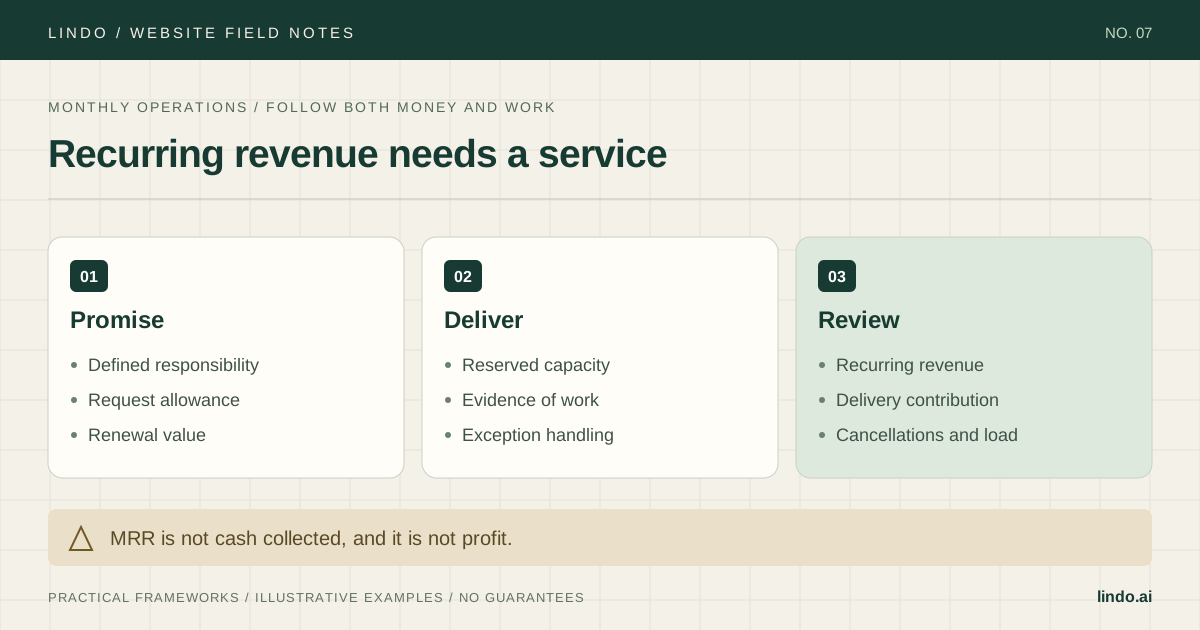
Sell a continuing responsibility the client values, define its limits, and track recurring revenue alongside delivery cost, cancellations, and capacity. Monthly revenue is neither collected cash nor profit.
- A good fit
- An agency with launched sites and repeatable work such as content updates, enquiry checks, or a defined publishing service.
- Pause if
- The monthly charge has no clear deliverable, or the promised work depends on unlimited support and unmeasured effort.
1. Choose the recurring job before the monthly price
Ask what will change after the site launches and who is able to handle it. A consultant may need occasional service updates; a venue may need frequent schedule changes; a growing service business may need new case studies. These are different workloads and should not be hidden inside one vague maintenance fee.
A recurring service should identify an ongoing responsibility, the evidence that it was performed, and a boundary. If the only recurring item is a platform subscription, describe it as such. Do not imply active monitoring, content work, or security management that you are not doing.
2. Model revenue, cost, and support variation separately
Consider a hypothetical plan with 10 clients paying $150 per month: the contracted monthly recurring revenue is $1,500, excluding one-time setup charges. Suppose direct platform and tools cost $30 per client and each client uses one hour of delivery time costed at $40. Monthly delivery cost is $700 and contribution before unallocated overhead and tax is $800.
Now suppose three clients each need two additional hours. That adds six hours, or $240, bringing contribution down to $560. The plan may still work, but only if those requests fit the promise and the team has the capacity. If they are outside scope, the change process should be clear before the request arrives.
Treat an annual prepayment separately: it may improve cash timing, but it creates future service obligations. For your management view, normalize a $1,800 annual recurring service to $150 per month rather than counting the full payment as new MRR. Confirm formal revenue recognition and tax treatment with your accountant.
10 clients × $150 = $1,500 monthly recurring revenue
10 × $30 direct tools = $300
10 × 1 support hour × $40 = $400
Delivery contribution = $800
Extra 6 hours × $40 = $240
Revised contribution = $560
Still excluded: unallocated overhead, acquisition costs, taxes
Separately record: invoiced amount, collected cash, overdue balances
3. Explain what the hosting-related charge covers
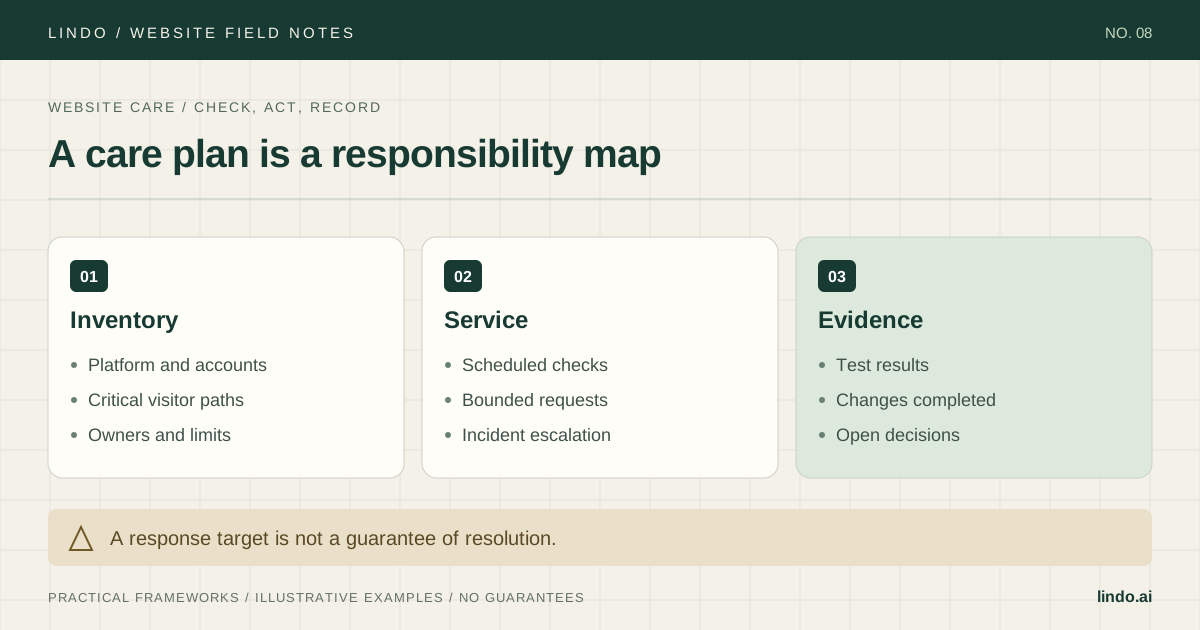
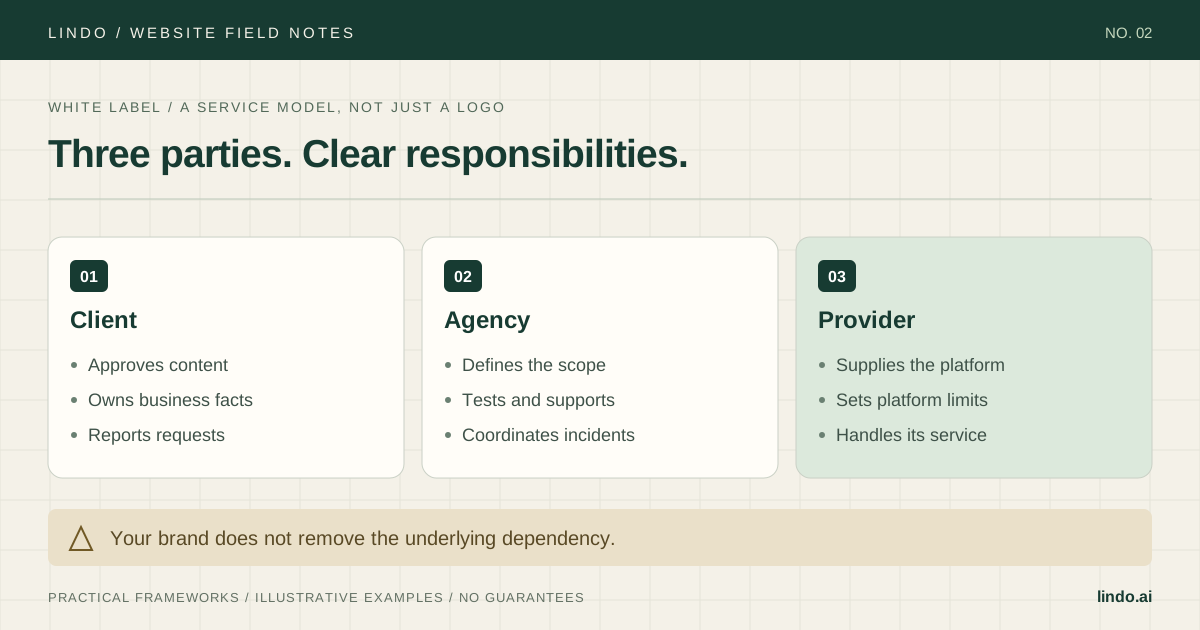
Show whether the client is paying the platform directly, reimbursing a cost, or buying a managed service from your agency. List the account owner, renewal responsibility, support contact, and the consequences of cancellation. A domain and a hosting or builder subscription are different assets with different handoff steps.
If the platform handles infrastructure, avoid charging for imaginary server administration. Your work may still include checking the public site, coordinating provider incidents, testing forms, and managing approved content. Those are legitimate responsibilities when they are actually included and performed.
Maintain an ownership register so a payment problem does not become an account-recovery crisis. Never make unapproved changes to client billing or domain access as a shortcut to resolving a service disagreement.
4. Scope ongoing search work as deliverables, not rankings
If you offer ongoing search work, define the activity and its limits: reviewing relevant query data, correcting an identified indexing issue, improving a particular service page, or writing a researched article with approved sources. A monthly report that repeats impressions without interpretation is not the same as doing improvement work.
Agree which property access is required, who approves content, and how you will record changes. Separate observation from causation: a rise in enquiries after a page change does not by itself prove the change caused it. Do not sell guaranteed ranking positions or a fixed number of leads as a routine care-plan inclusion.
5. Sell publishing capacity with input requirements
A content service needs an editorial owner, source material, approval deadlines, and a definition of a finished piece. ‘Four posts per month’ is incomplete if no one can supply business facts or approve claims. Describe whether the work includes interviews, research, image preparation, uploading, and revisions.
Set a queue rule. For example, a client submits one consolidated request by an agreed date; you confirm scope and schedule before starting. If the client misses the content deadline, define whether the work moves, expires, or rolls over. Each option has a capacity cost, so do not leave it ambiguous.
Keep recurring work distinct from projects. A new campaign section, rebrand, or multilingual expansion can have its own brief and fee instead of consuming a maintenance allowance indefinitely.
6. Review retention and capacity before adding more services
Use a simple monthly movement report: opening MRR + new recurring revenue + expansion − contraction − cancellations = closing MRR. In a synthetic example, $1,500 + $300 + $50 − $50 − $150 = $1,650. Keep one-time builds out of this calculation, and record your treatment of paused or delinquent subscriptions consistently.
Review why clients renew or leave, how many requests exceed scope, and whether the promised response window is being met. If a client regularly buys overage, a different service level may fit. If many clients do not use or understand the plan, revisit the offer rather than manufacturing tasks to justify it.
Reserve time for incidents, not just expected edits. Increasing MRR while filling every available hour can produce a fragile business. Expand the client count or service menu only when you can explain the delivery load and maintain a workable exit path for clients.
| Measure | What to record | Decision it informs |
|---|---|---|
| Recurring movement | New, expansion, contraction, cancellations | Demand and retention |
| Delivery hours | Included work, overage, incidents | Capacity and plan boundaries |
| Contribution | Revenue minus defined delivery costs | Service economics |
| Client evidence | Completed work and unresolved needs | Renewal conversation |
Take it into the project
Recurring-service economics worksheet
Copy this into your project brief, assign an owner to each item, and attach evidence before marking it complete. No email required.
- Every recurring charge has a stated responsibility or cost.
- MRR, invoicing, collected cash, and contribution are separate.
- Support variation is included in capacity planning.
- Request limits, overage, and unused capacity are explained.
- Platform, domain, and billing ownership are documented.
- Monthly review includes cancellations and delivery evidence.
- Clients have a clear cancellation and handoff path.
Includes MRR movement, direct-cost and support scenarios, capacity planning, and a client renewal review.
Common questions
Can I include a website build in a monthly subscription?
Yes, if the commercial agreement clearly explains the build scope, ongoing service, commitment, ownership, and exit terms. Model the initial delivery cost and early-cancellation risk; monthly billing does not make the build free.
What is a good monthly fee?
There is no universal fee. Start with the actual responsibilities, direct costs, support usage, and capacity risk, then test whether suitable clients value the offer. The numbers in this guide are illustrative.
Should unused editing time roll over?
Either approach can be defined, but rollover creates future work you owe. Put a clear rule and any cap in the agreement and track the resulting capacity obligation.