The short answer
Start with the business’s actual enquiry or booking process. Verify a relevant website problem, propose the smallest useful scope, and agree how the client will judge delivery without promising rankings or revenue.
- A good fit
- A defined local service with a reachable owner and a website problem within your delivery skills.
- Pause if
- The main constraint is lack of demand, unavailable staff, or an unsupported operational system. A redesign alone may not solve it.
1. Choose a service situation, not just a business category
A restaurant taking table bookings, a plumber handling urgent calls, and a studio selling consultations need different visitor journeys. Even two businesses in the same category may have different capacity and service areas. Choose a situation you understand well enough to ask useful questions.
For a hypothetical garden-design studio, the objective might be qualified project enquiries rather than more calls of every kind. The site should explain the type of work, service area, process, and information needed to start a conversation. That is a more useful brief than ‘make it modern.’
2. Ask how customers reach the business today
In discovery, follow a recent enquiry from first contact to decision. Ask where it came from, what the customer wanted to know, who replied, and where it slowed down. Use the owner’s account as a starting point, not as proof of a general conversion pattern.
Ask what the business wants less of as well as more of. A contractor may want fewer out-of-area enquiries; a photographer may need visitors to distinguish commercial assignments from weddings. If the team cannot respond to existing leads, a bigger enquiry form may make the problem worse.
Which service should the website help people choose?
What do suitable customers ask before they enquire?
Which enquiries are not a fit, and why?
Where do submissions or calls go today?
Who replies, and what can you truthfully promise about the next step?
Which facts, photos, and examples can you approve?
What would make this project worth prioritizing now?
Who makes the decision and signs off the content?
3. Show one obstacle in the real visitor journey
Use an ordinary public page and the task the owner described. If the task is ‘ask about a garden-design project,’ walk from the service description to contact. Show what is missing: perhaps the service area is unclear, the gallery has no project context, or the button goes to a general inbox without explaining what to send.
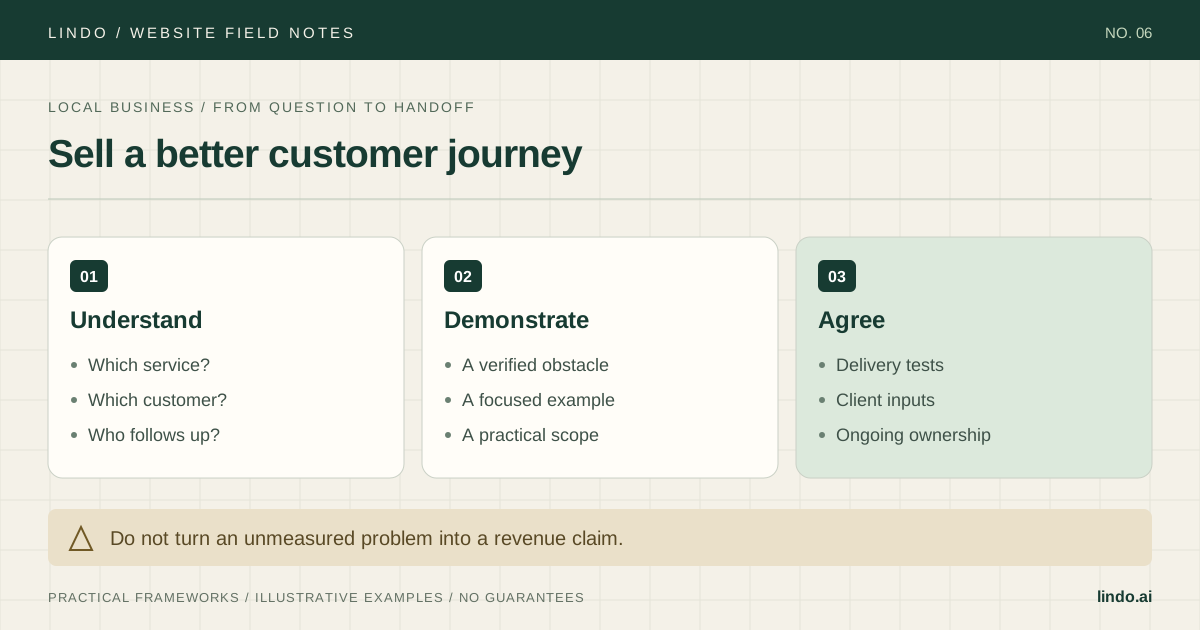
Label your conclusions carefully. ‘The page does not state your service area’ is an observation. ‘This may be why you receive out-of-area enquiries’ is a hypothesis to discuss. ‘You are losing $5,000 a month’ is not justified without evidence.
With permission, show a limited concept using approved facts and imagery. Mark it as a proposal, not a finished deliverable. Avoid rebuilding the whole site for free before you know who can approve it or whether the existing system has hidden dependencies.
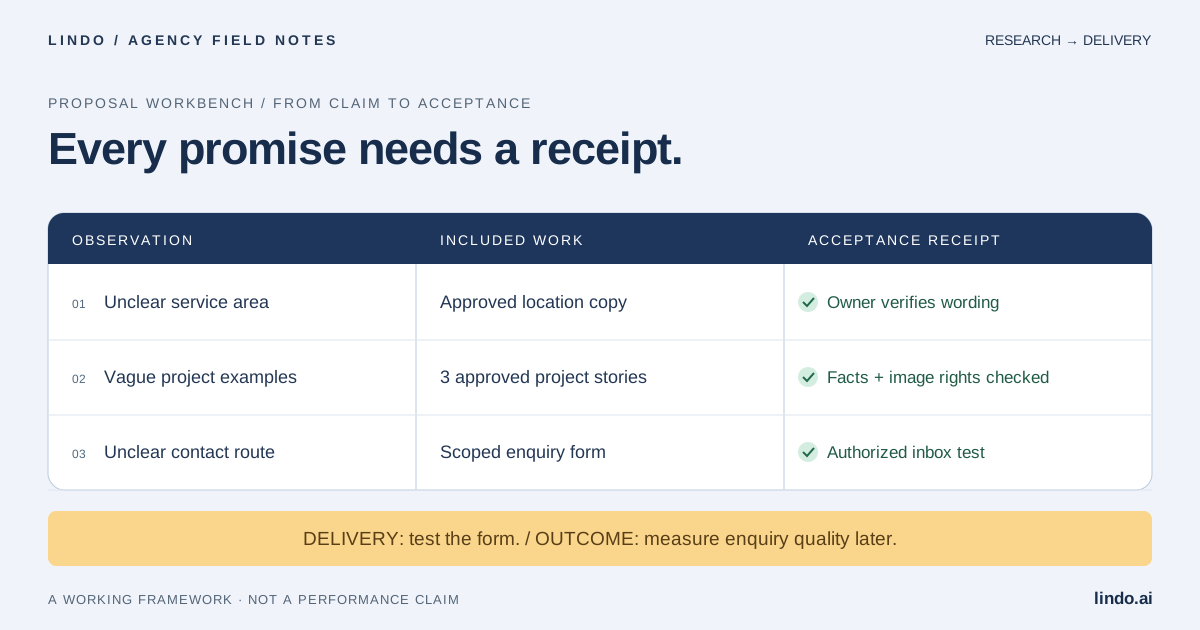
| Observation | Proposed change | Delivery test |
|---|---|---|
| Service area is absent | State approved areas near the enquiry CTA | Client verifies the location wording |
| Gallery has no context | Add project type and scope captions | Each image has approved use and context |
| Contact instructions are vague | Explain which project details to send | Visitor can identify the next step |
4. Write a proposal that reflects the conversation
Open with the buyer’s stated problem, then list the agreed pages, content responsibilities, contact path, review stages, and exclusions. Keep the fee, ongoing costs, and schedule assumptions visible. If the launch date depends on approved photos and copy, say when those inputs are needed.
For the garden studio, a first release could include a home page, a design-service page, selected projects, and contact. A separate booking system, recurring blog content, or a second language can wait unless it is essential to the agreed journey. Explain the tradeoff instead of offering a discount on unchanged work.
Define success at two levels. Delivery success is what you can test at launch: accurate content, working enquiry delivery, readable mobile pages. Business outcomes such as qualified enquiries require observation after launch and depend on traffic, seasonality, demand, and follow-up.
5. Treat objections as information
If the owner says they already get work from referrals, ask whether the website is meant to generate demand or support people who were referred. The right project may be a small credibility update, not a new lead-generation site. If they have no time for content, propose a scoped interview and approval process rather than pretending AI can supply their business facts.
If budget is the issue, find out whether the project is low priority or the scope is too large. A smaller release may help; a payment arrangement does not make an unaffordable service affordable. If the existing website already does the job, acknowledge that. A clear no preserves more trust than a forced sale.
I can commit to the agreed pages, accurate content, and a tested enquiry path. I cannot guarantee demand or search rankings. We can define what a qualified enquiry means, record a baseline if you have one, and review the results after launch alongside traffic and your follow-up process.
6. Make the handoff part of the sale
Before work begins, confirm the approver, account owners, content inputs, and how changes will be requested. Before launch, have the owner review the live-contact details, service area, offer, and response wording. Test the final enquiry path with authorization and confirm receipt with the person who will handle it.
Leave a short operating note: how to update hours and services, where submissions arrive, who renews the domain, and how to request help. Agree a follow-up review that checks the quality of enquiries as well as raw counts. Do not collect or publish customer information for a case study without appropriate permission.
7. Work the fictional Cedar brief from discovery to decision
Cedar Garden Studio is a fictional business used throughout this example, not a Lindo client or a measured case study. The owner says most enquiries arrive through referrals, but homeowners repeatedly ask which areas the studio serves and what a suitable project looks like. That points to a clarification task, not evidence that the business needs more traffic.
The proposed first release is Home, Garden Design, Projects with three approved summaries, and Contact. The owner supplies factual captions, image permissions, service-area wording, and the recipient address. The agency prepares the layouts, places approved content, and tests the agreed visitor journey. A booking calendar, online payments, and ongoing blog posts are excluded.
Present one private service-page concept after permission, then ask the owner to explain the next step as a customer would. If the owner instead reveals that appointment scheduling is essential, stop and validate that dependency before quoting the four-page build. The concept has helped uncover scope; it has not proved conversion uplift.
Visitor task: decide whether the garden-design service fits and start an enquiry.
Show: service area, project examples, process, and contact instructions.
Ask: which facts need correcting, and which customer questions remain unanswered?
Record: approved direction, missing inputs, and any new requirement.
Acceptance: owner-approved facts; readable mobile journey; authorized form delivery test.
Next decision: approve the scoped proposal or resolve the uncovered dependency.
8. Qualify missing-website prospects before making a pitch
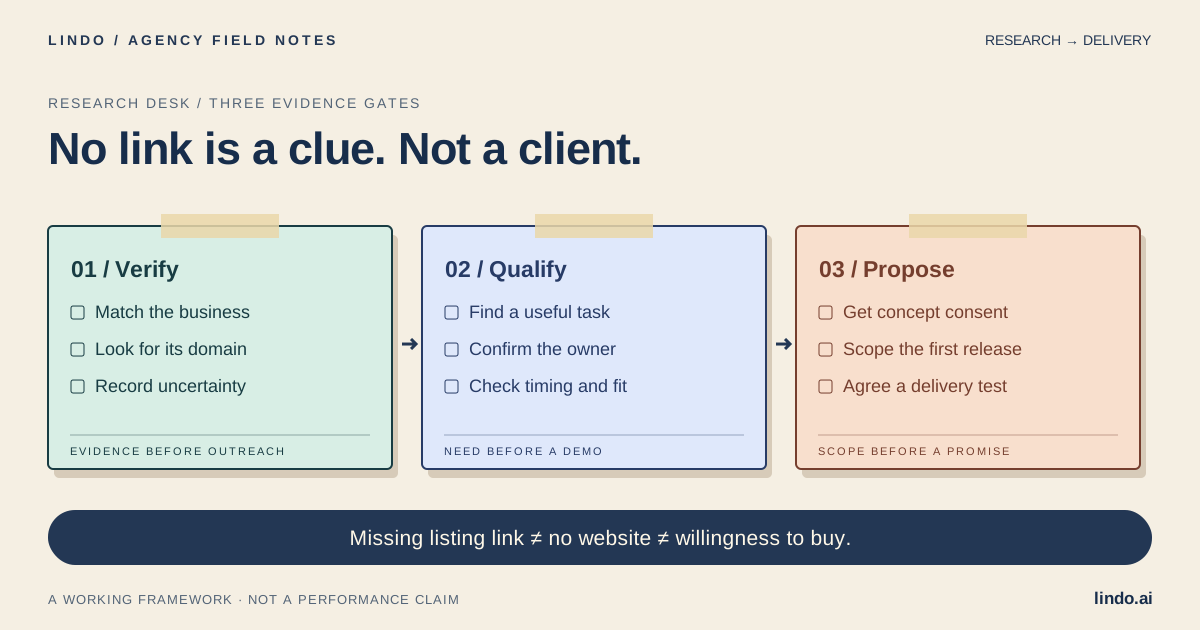
A business listing without a website button may still have a site under another name. Cross-check its identity, location, business-owned social profiles, and possible domain before describing it as absent. Record ‘no site found in these checks’ when the evidence is incomplete.
If a separate site genuinely is missing, ask whether a stable service explanation or enquiry route would solve an owner-confirmed problem. A busy business with no current priority is not a failed lead to chase indefinitely. Keep raw candidates, verified prospects, conversations, qualified projects, proposals, and accepted work as separate stages.
Take it into the project
Local-business discovery and proposal brief
Copy this into your project brief, assign an owner to each item, and attach evidence before marking it complete. No email required.
- The desired visitor action is based on discovery, not a generic pitch.
- Public-site observations are separated from hypotheses.
- Concepts use approved facts and are labeled as proposals.
- Scope, inputs, ongoing fees, and exclusions are explicit.
- Delivery tests are separate from business-outcome hopes.
- The client can operate the enquiry path after handoff.
- A missing website link has been verified rather than treated as buyer intent.
- The proposal names the content owner, delivery test, and scope exclusions.
Includes discovery questions, an observation-to-test table, proposal boundaries, and a handoff record.
Common questions
Should I build a demo before contacting the business?
A small, clearly labeled concept may help after you understand the problem and have permission to use the materials. A full speculative rebuild can waste time and create misleading expectations about scope or ownership.
What if they only use social media?
Ask whether a separate site would solve a real gap, such as explaining services in detail or giving referred visitors a stable contact path. Do not assume every business needs the same site structure.
Can I promise local search rankings?
No. Define the content and technical work you will deliver, and treat search visibility as something to monitor. A new website does not guarantee indexing, rankings, or enquiries.