The short answer
Choose a narrow offer, show relevant evidence, and track the path from a genuine conversation to a qualified project. Diagnose where that path breaks before increasing outreach volume.
- A good fit
- A freelancer or agency with a deliverable service and enough capacity for a new project.
- Pause if
- You cannot explain the offer, show credible work, or support the functionality prospects need. Repair those gaps before buying traffic or expanding outreach.
1. Define who should—and should not—buy
Write a short fit rule before creating a prospect list. For example: ‘Independent service businesses with an established offer, an owner who can approve content, and an enquiry website within our technical scope.’ Then write disqualifiers: unsupported commerce, no content owner, or an immovable launch date that makes review impossible.
Select prospects because of a relevant situation you can observe, not because their design looks old. A new service launch, a changed location, or a contact path that demonstrably fails can justify a conversation. A dated visual style does not prove the business has a revenue problem. Keep observations separate from your interpretation.
2. Show the decision-making, not just the screenshot
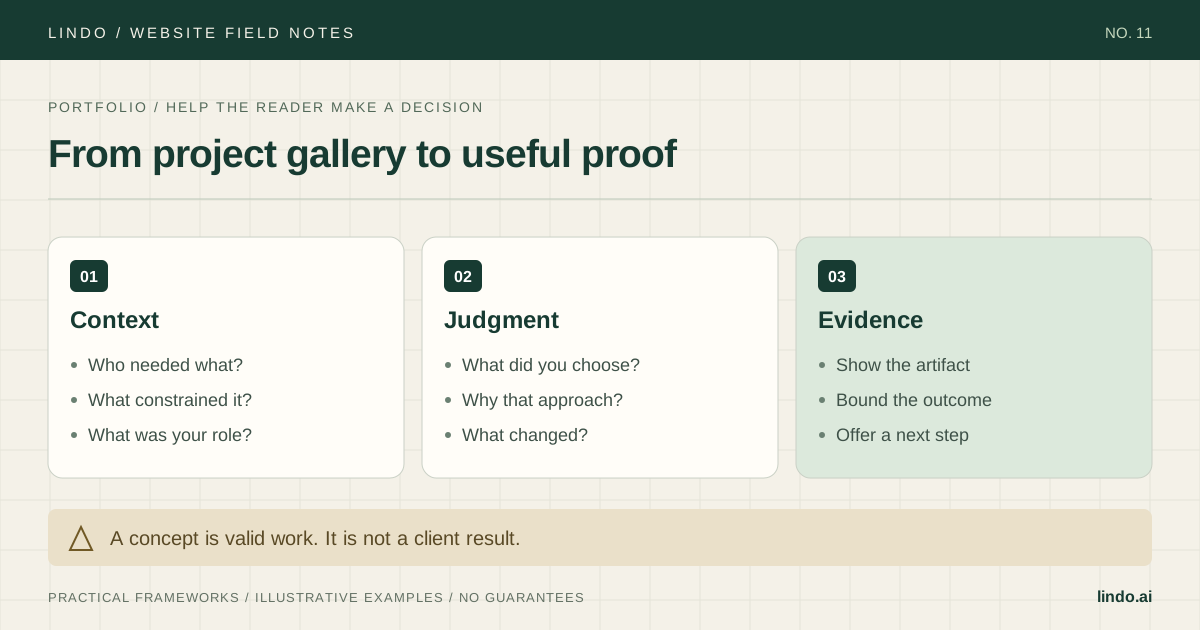
Choose one example close to the prospect’s problem. Show the brief, what changed, why you chose that solution, and what evidence you have. If you tested a form, describe the test. If you measured an outcome, state the period and limitations. Do not label a nicer design a conversion improvement without data.
A self-initiated example is acceptable when it is clearly labeled. It can demonstrate a service page, responsive behavior, and content structure without pretending to be paid client work. Keep a short proof page ready so a prospect can inspect your work without sitting through a long sales call.
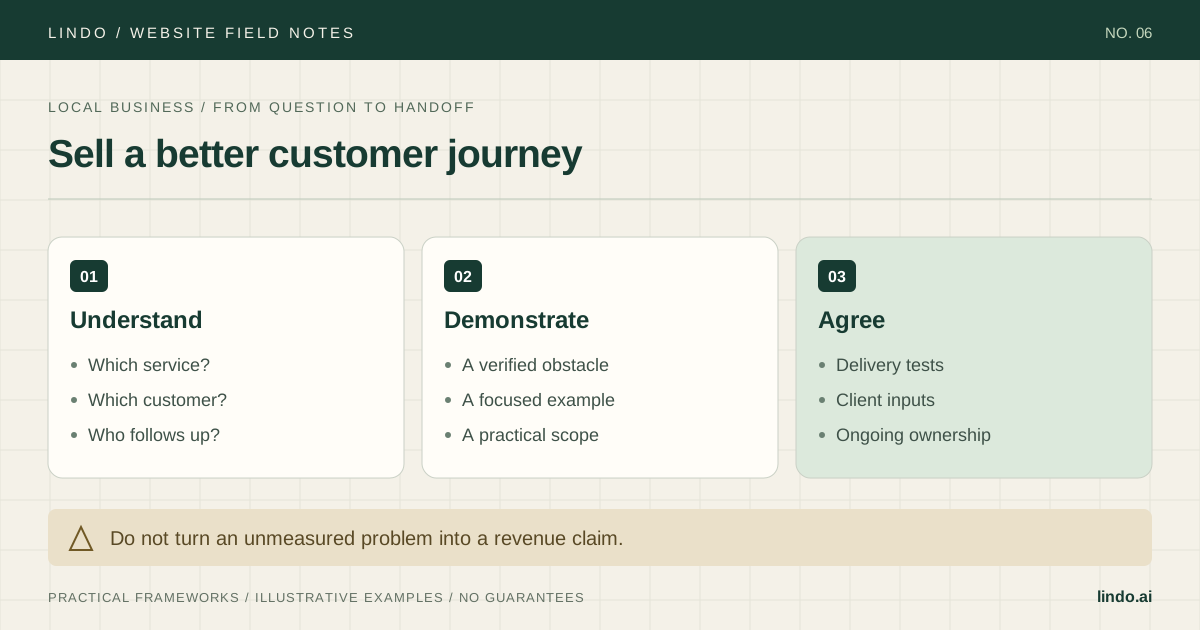
3. Offer one verified observation, not a generic teardown
Inspect a normal public visitor journey without intrusive testing. Try to understand the offer, find the relevant service, and locate the contact route. Record the page URL, device, observation, and date. Do not submit repeated test leads to someone else’s business or run security scans as a sales tactic.
A useful observation is narrow: ‘On the service page, the booking link opened an unavailable page when I checked today.’ An unhelpful one is ‘Your website is losing thousands every month.’ Give the business room to explain; the behavior may be temporary, intentional, or already being fixed.
If you use direct outreach, check applicable rules and the channel’s policies, identify yourself, and respect refusals. Do not disguise automation as a personal relationship. There is no universal safe sending volume or guaranteed reply rate.
Subject: A question about [specific service/page]

Hi [name],
I’m [name], and I build enquiry websites for [relevant business type].
While looking at [public page], I noticed [specific, verified observation].
I may be missing context—is [intended visitor action] still the goal here?
If useful, I can send a short explanation of one possible fix.
If this is not a priority, no problem.
[Real name and business details]
4. Build partnerships around a clear handoff
Photographers, copywriters, brand designers, and local business advisers may meet clients who need websites. A useful partnership specifies the fit, the introduction process, who owns the client relationship, and how you will keep the referrer informed. ‘Send me anyone who needs a website’ puts too much qualification work on the partner.
Give them a two-sentence description of a suitable project and one relevant example. Ask what work they want referred in return, without inventing reciprocal demand. If there is a referral fee, make the arrangement transparent where required and agree on the trigger before an introduction becomes a sale.
Keep introductions warm and specific: ask the prospective client whether they want the connection, then share only necessary context. A partner’s address book is not permission to add people to an outreach sequence.
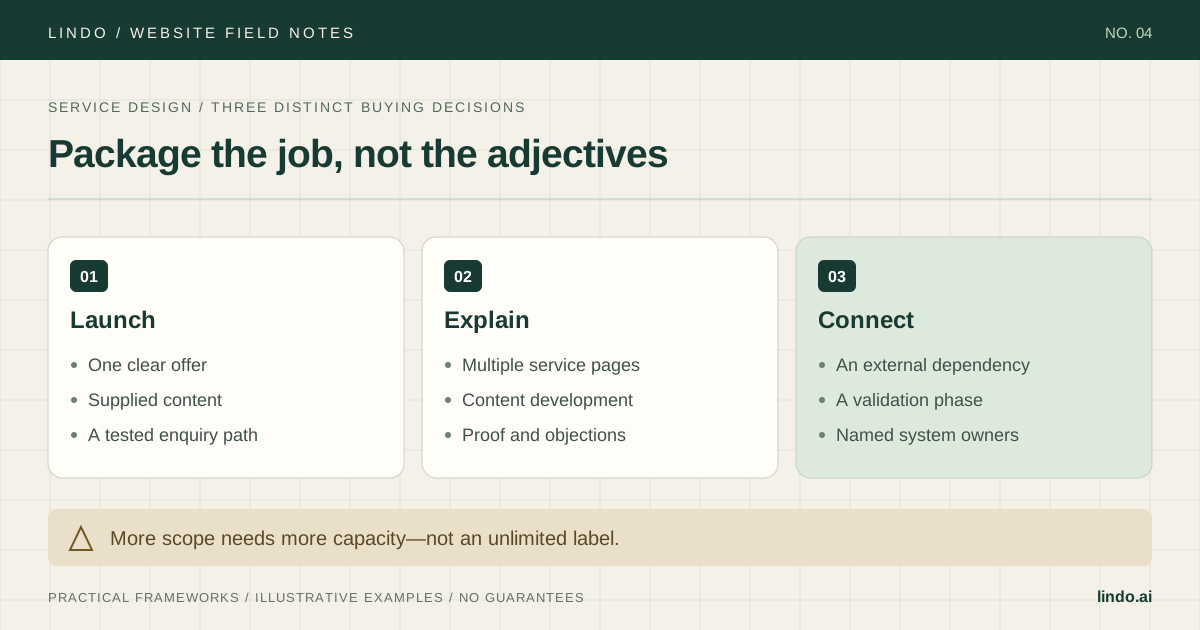
Good fit: service business with approved offer and a named content owner.
Typical job: clear service pages and one tested enquiry path.
Not our scope: custom applications or unvalidated integrations.
Useful introduction: the decision maker and the reason this is a priority.
What we send back: confirmation of fit and the next agreed step.
5. Ask for introductions after an observable success
A good moment to ask is after a milestone the client values: a smooth launch, a resolved content problem, or a successful handoff. Make the request specific and optional. ‘If you know another consultant struggling to explain their service online, I would appreciate an introduction’ is easier to act on than ‘please refer me.’
Ask separately for permission to publish the project, use a testimonial, or share a business result. Approval to build the site is not automatic approval to publish private metrics. Keep the wording and attribution accurate, and do not pressure a client to praise you as part of receiving support.
6. Diagnose the funnel before increasing activity
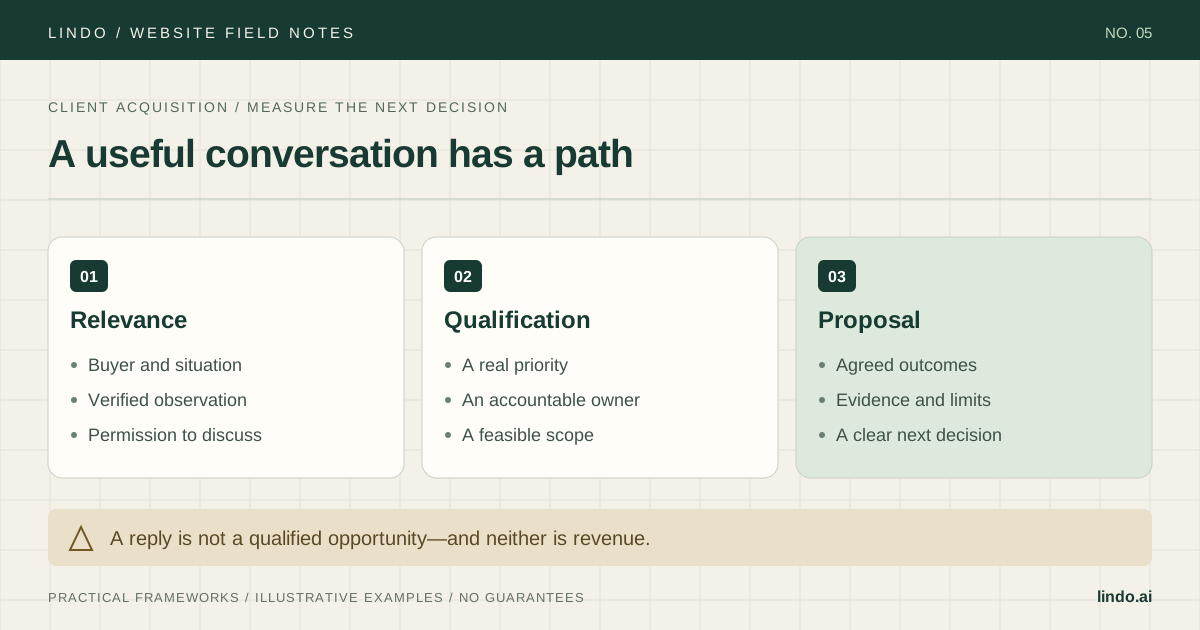
Use consistent stage definitions. A reply is any response; a qualified opportunity has a relevant need, an owner, feasible scope, and a plausible buying process. A proposal is a written offer after discovery. A win is accepted work under your chosen commercial process—not merely verbal enthusiasm.
Here is a synthetic example, not a benchmark: 20 relevant conversations produce 6 discovery calls, 3 qualified opportunities, 2 proposals, and 1 accepted project. That record does not tell you to contact 20 people per client. It tells you which transitions to inspect. Why were three discovery calls unqualified? Why did one qualified prospect not receive a proposal?
Publish content that answers the questions prospects actually repeat, then link it from relevant conversations. If people reply but do not book discovery, examine your next-step request. If proposals stall, examine scope, decision timing, and proof. Record lost reasons in the buyer’s words; ‘too expensive’ can mean low priority, wrong scope, or a genuine budget limit.
| Pattern | Question to investigate | Next experiment |
|---|---|---|
| Few relevant replies | Is the observation useful and the buyer right? | Narrow the fit and rewrite one message |
| Calls, few qualified projects | Is the offer or qualification unclear? | Ask scope and ownership questions earlier |
| Proposals, no decisions | Is the decision process understood? | Agree a review date and decision owner |
| Wins, poor delivery | Are you selling outside capacity? | Tighten scope before adding demand |
Take it into the project
Client qualification and outreach worksheet
Copy this into your project brief, assign an owner to each item, and attach evidence before marking it complete. No email required.
- Buyer fit and disqualifiers are written down.
- Portfolio evidence matches the problem and labels concepts honestly.
- Outreach observations are verified and do not invent losses.
- Introductions and follow-ups respect consent and channel rules.
- Discovery confirms ownership, priority, feasibility, and buying process.
- Pipeline stages and lost reasons are recorded consistently.
Includes observation notes, an outreach template, discovery prompts, partner handoffs, and stage-by-stage pipeline review.
Common questions
Should I offer a free website to get started?
A clearly scoped pilot can build experience, but free work still consumes delivery capacity and needs boundaries. A transparent self-initiated project may demonstrate your skills without creating an open-ended client obligation.
Which acquisition channel is best?
Start where you can reach suitable buyers with credible context and measure the result. Warm introductions, partnerships, relevant outreach, and useful content have different effort and trust requirements. There is no universally best channel.
How many follow-ups should I send?
There is no universal number. Follow the applicable rules, respect a no or opt-out, and keep any agreed follow-up useful. Silence is not permission to continue indefinitely.