
AI explained • Lindo field notes
AI Harness Tools in 2026: What to Use—and What to Build
Compare Claude Code, Codex CLI, Claude Agent SDK, and LangGraph by the work you need to own. Includes a practical evaluation task.
The short answer
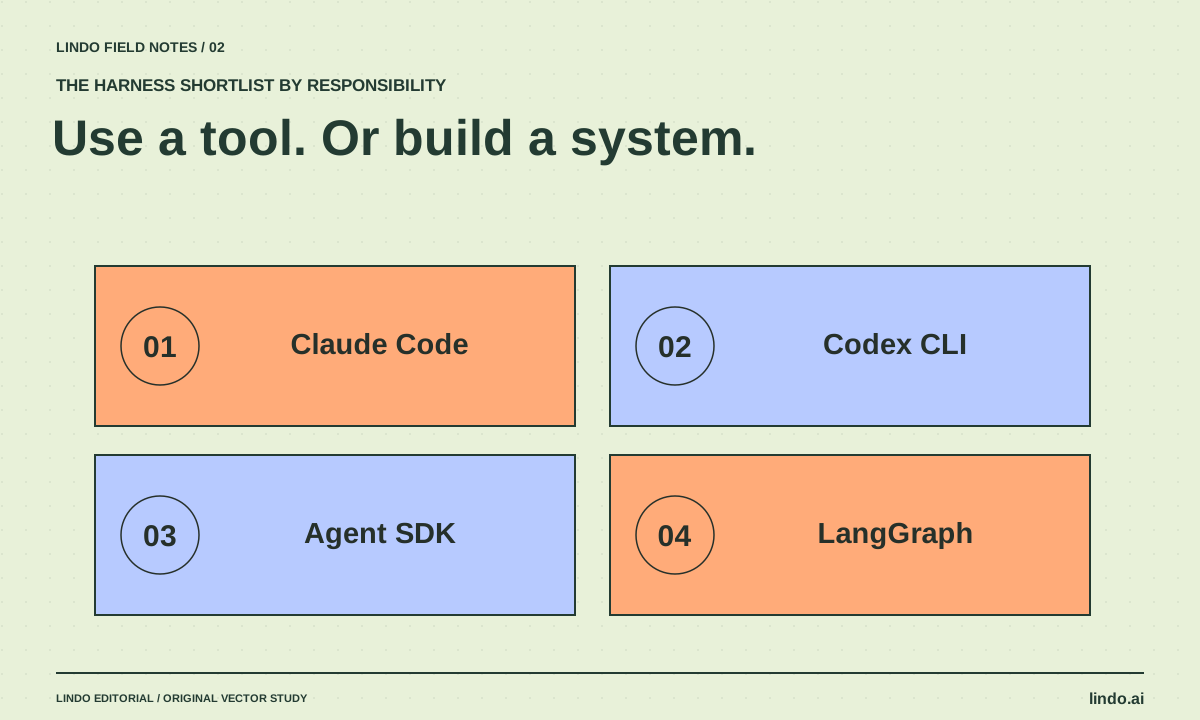
For hands-on website development, start by evaluating a packaged coding assistant such as Claude Code or Codex CLI. For a custom agent product, investigate an SDK or orchestration runtime such as Claude Agent SDK or LangGraph. These are different layers, not four interchangeable entries in a universal ranking.
In this article
Searching for the “best AI harness” produces an awkward shortlist: command-line applications, SDKs, workflow runtimes, and occasionally a model name. Comparing them on one star-rating scale hides the decision you actually need to make: do you want to do a task, or build software that does the task repeatedly?
This is a documentation-based selection guide, not a hands-on benchmark. Product capabilities were checked on September 9, 2026. We do not claim a speed winner, quote changing subscription prices, or assume that a tool is safe simply because it exposes approval settings.
FIELD NOTE / 01
Choose the layer before the brand
A packaged assistant handles much of the interaction loop for you. You bring a repository, instructions, and a willingness to review changes. An SDK gives a developer components for building an application around an agent. An orchestration runtime helps manage execution and state, but you still own the surrounding product.
For a freelancer creating three client sites, maintaining an agent service may be needless overhead. For a software team processing hundreds of structured content updates with approval queues, a custom system could be justified. Start with the operating problem rather than the popularity of a framework.
| Option | Layer | Evaluate it when | Responsibility to inspect |
|---|---|---|---|
| Claude Code | Packaged coding assistant | You want an agent working in a website project | Project permissions, review, and deployment boundaries |
| Codex CLI | Packaged coding assistant | You want terminal-based work on local code | Environment access and evidence behind completion |
| Claude Agent SDK | Developer SDK | You are building a Claude-powered agent application | Your application’s tools, access model, and operations |
| LangGraph | Orchestration runtime | You need explicit stateful workflows | Graph design, persistence, recovery, and hosting |
FIELD NOTE / 02
For a website repository: evaluate the complete editing loop
Claude Code is a coding agent that can work with project files and development tools. Codex CLI similarly provides a terminal-based coding-agent interface. That makes them useful starting points for a supervised website build; neither removes the need to review what was changed.
Try a real maintenance task before commissioning a whole site. Ask the tool to repair a broken navigation route, add a labeled inquiry form, and document how to test it. Check whether it follows the project’s conventions or creates a parallel implementation you will have to untangle.
FIELD NOTE / 03
For your own product: evaluate state and recovery
The Claude Agent SDK is an application-building option, not a hosted website editor. LangGraph documents facilities for durable execution, persistence, and human involvement in workflows. Those capabilities matter when work must pause, resume, or recover.
For example, a client-content agent might gather approved files, draft three pages, pause for review, and resume only after approval. Decide what happens if the reviewer edits the source while the agent is paused. If you cannot describe which version wins, adding persistence has not solved your product design problem.
FIELD NOTE / 04
Run one deliberately difficult trial
Use a disposable copy of a small website. Include a missing image, an inaccurate opening-hours sentence, and a working form that must not be replaced. Supply the correct business facts in a separate brief. Ask for a repair, a preview, and a concise evidence report.
Record successful corrections, regressions, human review minutes, and any action attempted beyond scope. Repeat with another task rather than extrapolating from one polished demo. A tool that preserves a working integration may be more useful than one that produces a more dramatic visual redesign.
FIELD NOTE / 05
Choose the setup you can operate next month
Inspect how work is logged, how credentials are scoped, and how you recover the last known-good state. Ask who updates dependencies and reviews failures. If the answer is “the agent,” you still need a person accountable for deciding whether its repair is acceptable.
For most small website teams, our starting recommendation is a packaged assistant plus clear project rules. Move to a custom harness only after repeated work exposes a specific limitation. This is an operating-cost judgment, not a claim that one vendor’s model is inherently better.
Take it into your next project
Copy the evaluation task
Use the same brief, time allowance, and acceptance checks across tools. Keep the project disconnected from production.
Inspect this disposable website project before editing.
Repair the missing /services route and broken hero image.
Correct opening hours using approved-facts.md.
Preserve the existing form endpoint and field names.
Do not install services, send messages, or deploy.
Show: changed files, preview route, checks run, and unresolved issues.
Evaluation record:
- Correct repairs:
- Regressions:
- Unsupported claims introduced:
- Minutes of human correction:
- Actions outside scope:
- Recovery procedure:
Common questions
Is LangGraph a replacement for a coding assistant?
Not directly. It is infrastructure for building stateful agent applications. A coding assistant is an application you can already use to work on a project.
Which option is cheapest?
Compare the whole workflow: subscription or API usage, execution, hosting, review time, and maintenance. Without the same workload and current plan details, a single cost ranking would be misleading.
Sources & further reading
Vendor links support product descriptions. Worked examples, checklists, and selection criteria are Lindo’s editorial guidance; they are not customer results or controlled benchmarks.
AI explained
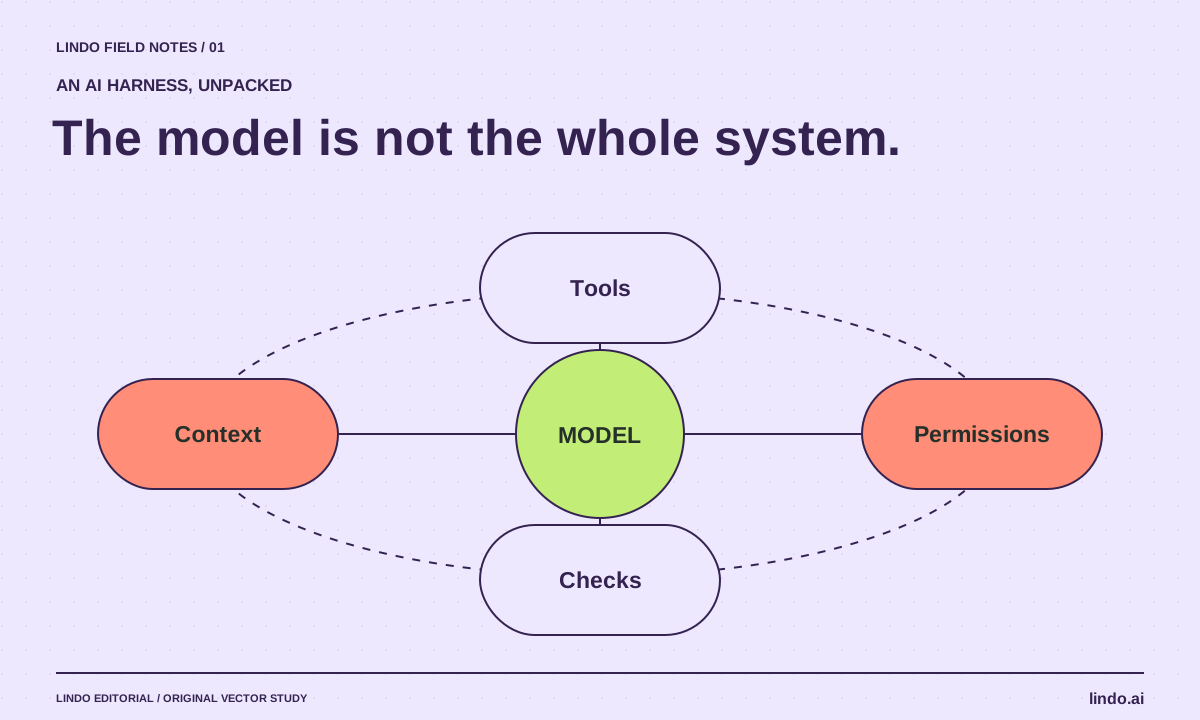
What Is an AI Harness? The System Around the Model
Understand AI harnesses through a website-building example: tools, context, permissions, checkpoints, and the tests that keep an agent on track.
AI explained
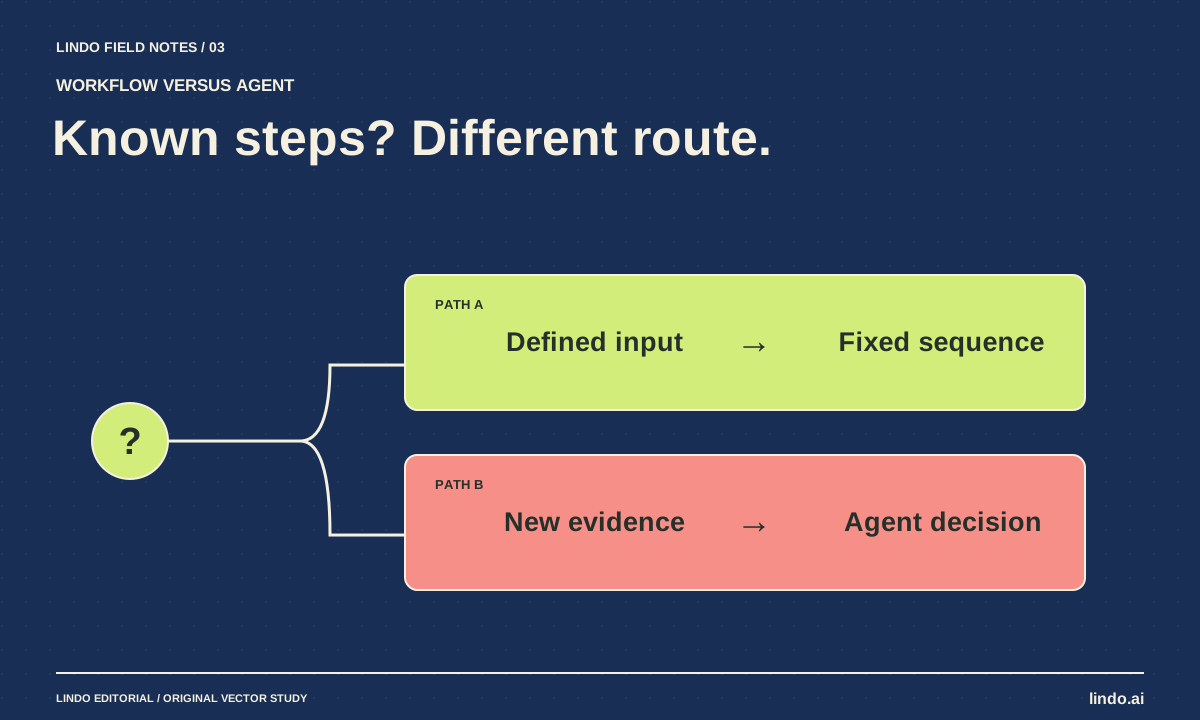
AI Agent vs. Workflow: Which Does Your Website Project Need?
Choose between predictable automation and agent-led work using three website examples, a failure test, and a practical decision worksheet.
Choose your tools
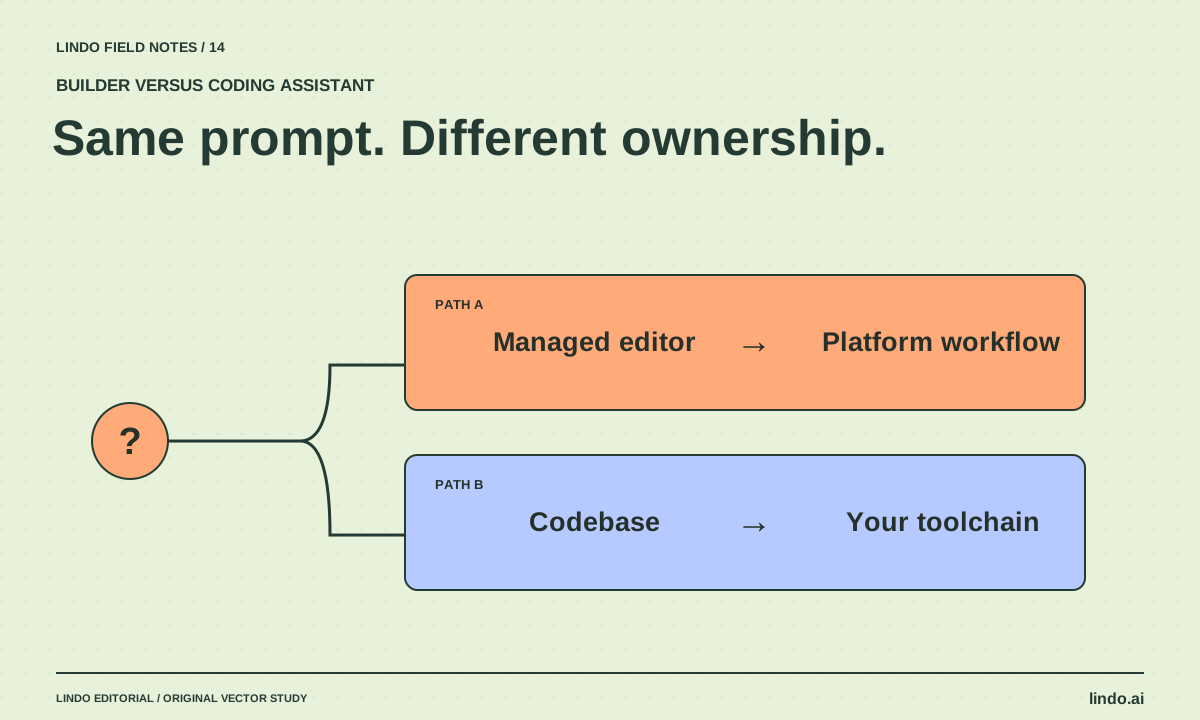
AI Website Builder vs. AI Coding Assistant: Who Owns the Work After Launch?
Compare managed builders and coding assistants by editing, hosting, integrations, maintenance, and handoff—not by how quickly a homepage appears.