
Choose your tools • Lindo field notes
Best AI Tools for Website Copy: Choose a Writing Workflow, Not a Word Factory
Evaluate ChatGPT, Claude, and Jasper for website copy using approved facts, page intent, brand voice, and a common editing test.
The short answer
For a small website, start with a conversational assistant such as ChatGPT or Claude and a strong source brief. Evaluate a marketing-focused system such as Jasper when shared brand rules and team workflows are the real problem. Choose by factual discipline, editing control, and review effort—not the number of words generated.
In this article
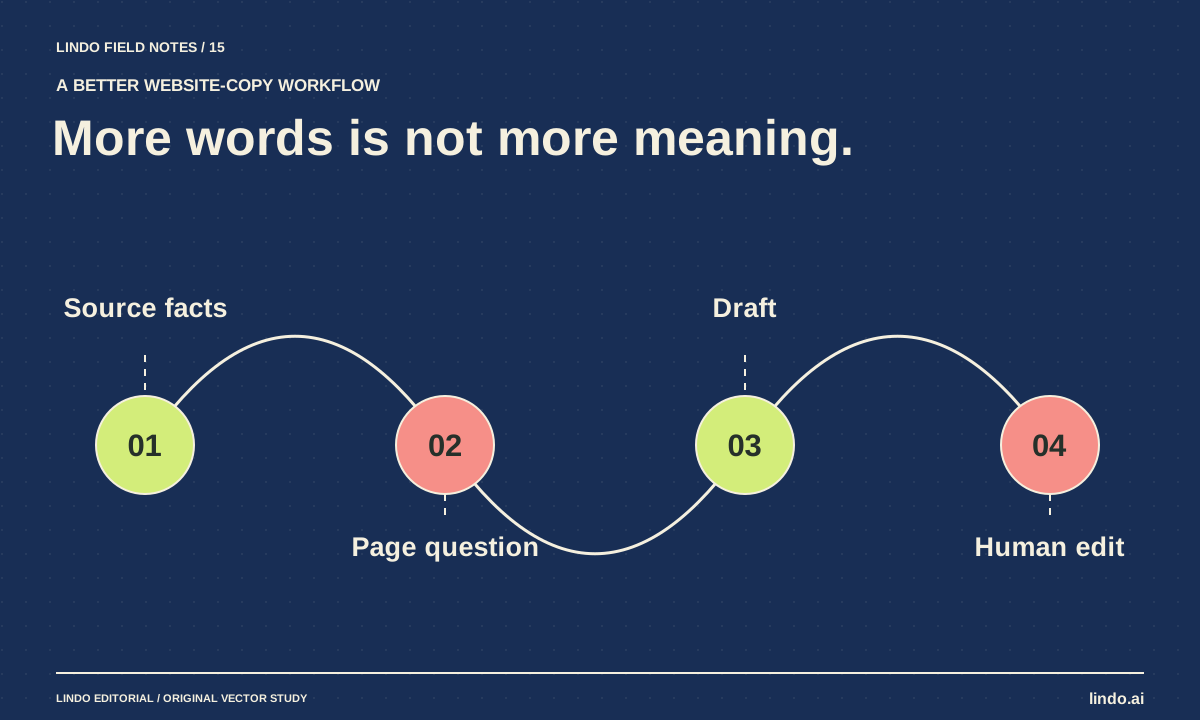
A website-copy tool should help a visitor understand an offer. It should not simply turn “we clean offices” into three paragraphs about transforming spaces. The most useful test is whether it preserves facts, answers a real question, and makes the next action clearer.
This is a documentation-based shortlist with an original evaluation method. We have not run a controlled benchmark across every plan. Product features and account limits change; use the vendors’ current documentation for availability and test with your own approved material.
FIELD NOTE / 01
Three options, different operating needs
ChatGPT’s prompting guidance is a useful starting point for specifying goals, context, and constraints. Claude is another conversational option for iterative drafting. Jasper’s brand-voice product focuses on shared voice controls for marketing work.
Our recommendation is conditional: use a conversational workflow when one person owns a small site; investigate a more structured marketing platform when multiple contributors repeatedly struggle to apply the same rules. A larger tool does not solve an unapproved or contradictory brief.
| Option | Evaluate for | Test carefully |
|---|---|---|
| ChatGPT | Conversational outlining and revision | Source fidelity and response to precise constraints |
| Claude | Iterative drafting from supplied material | Whether edits preserve scope and approved wording |
| Jasper | Shared marketing voice and governance needs | Actual team workflow and review controls |
FIELD NOTE / 02
Give every tool the same evidence
Prepare an approved service description, two examples of acceptable tone, the primary audience, and a list of prohibited claims. Include one unanswered question, such as an unconfirmed turnaround time. A useful tool should leave that gap visible rather than inventing a reassuring number.
Use a real page objective: “Explain what an initial consultation includes and help a suitable visitor request one.” Do not start with “write 1,000 SEO words.” The page should be as detailed as the decision requires, not as long as the generator can make it.
FIELD NOTE / 03
Score edits, not first-draft fluency
Ask for an outline, then a draft. Next, request three revisions: remove an unsupported claim, shorten the introduction without losing meaning, and change the primary action from booking to requesting an assessment. Inspect whether unrelated facts change.
Record factual errors, missing information, unnecessary repetition, and human correction time. Smooth prose can conceal a serious misunderstanding. A tool that asks one useful question may save more time than one that produces a polished but inaccurate page immediately.
FIELD NOTE / 04
Teach voice through choices and examples
Replace “friendly and professional” with concrete rules: use direct sentences, explain unfamiliar terms, avoid superlatives, and say what happens next. Provide an approved paragraph and a rejected paragraph with a reason for the rejection.
For a local repair business, the distinction might be between “We diagnose the fault before recommending a repair” and “We deliver unparalleled solutions.” The first tells the visitor something operational. The second changes the tone without adding evidence.
FIELD NOTE / 05
Review the page in its layout
Copy that reads well in a document may create a wall of text on a phone. Review headings, labels, captions, and error messages in the actual page. Check that the main action still matches the business process and that supporting proof appears near the claim it supports.
Keep the final factual review human-owned. Google’s people-first content guidance is a useful publishing standard; no writing tool can guarantee rankings. For source gathering, use the client-interview workflow before drafting.
Take it into your next project
The same-copy evaluation task
Run this with each candidate tool and retain the original outputs for comparison.
Using only the approved facts below, draft a service page.
Audience: [specific visitor].
Decision: [what they need to understand].
Primary action: [accurate next step].
Voice: direct, specific, no unsupported superlatives.
First list missing facts and proposed headings.
Then write the draft with source notes for factual claims.
Do not invent prices, credentials, reviews, guarantees, or availability.
Revision test: shorten the opening by one third, preserve all approved facts, and change the CTA to request an assessment.
Report unresolved questions.
Common questions
Which tool writes the most human-sounding copy?
That depends on the brief, examples, and editing process. Evaluate whether the writing is specific and useful, not whether it passes a vague “human” impression test.
Can I publish the first draft?
Only after factual, editorial, and in-layout review. Treat a fluent draft as a proposal, especially when it includes business promises or claims requiring evidence.
Sources & further reading
Vendor links support product descriptions. Worked examples, checklists, and selection criteria are Lindo’s editorial guidance; they are not customer results or controlled benchmarks.
Creative workflows
Turn a Client Interview into Website Copy People Can Actually Use
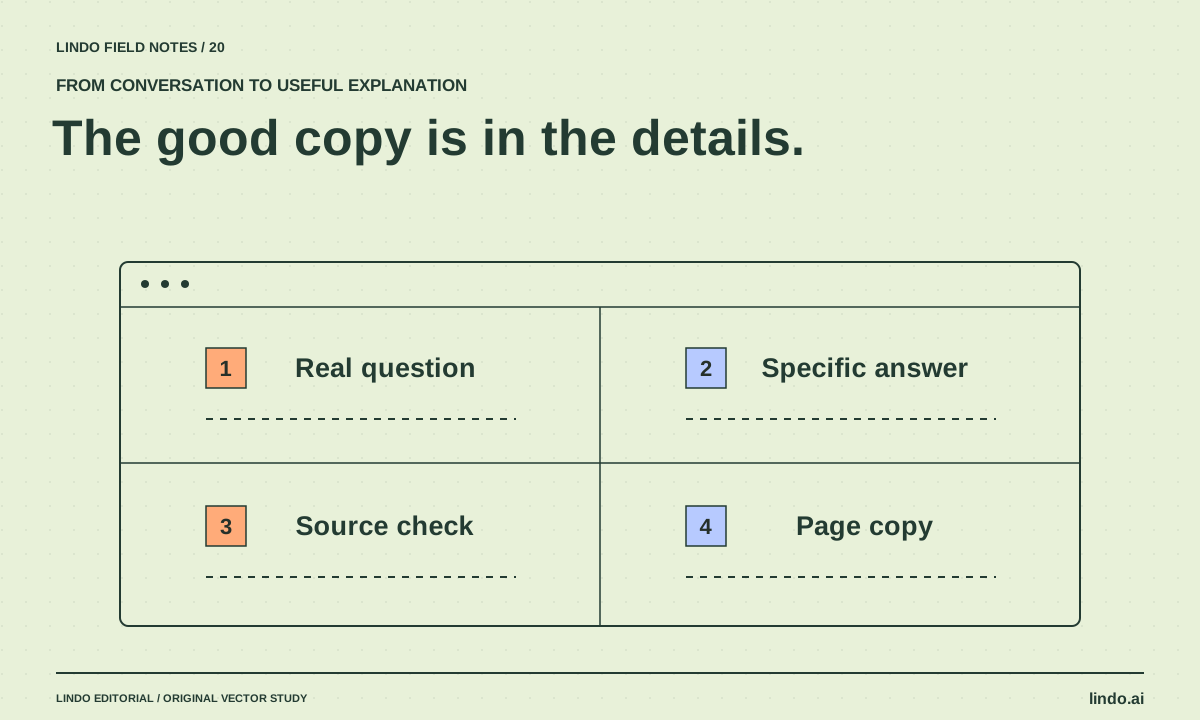
Ask better client questions, extract specific evidence, and turn an interview into clear service copy without manufacturing testimonials or promises.
Build with AI
How to Write a Website Brief for AI That Produces a Useful First Draft
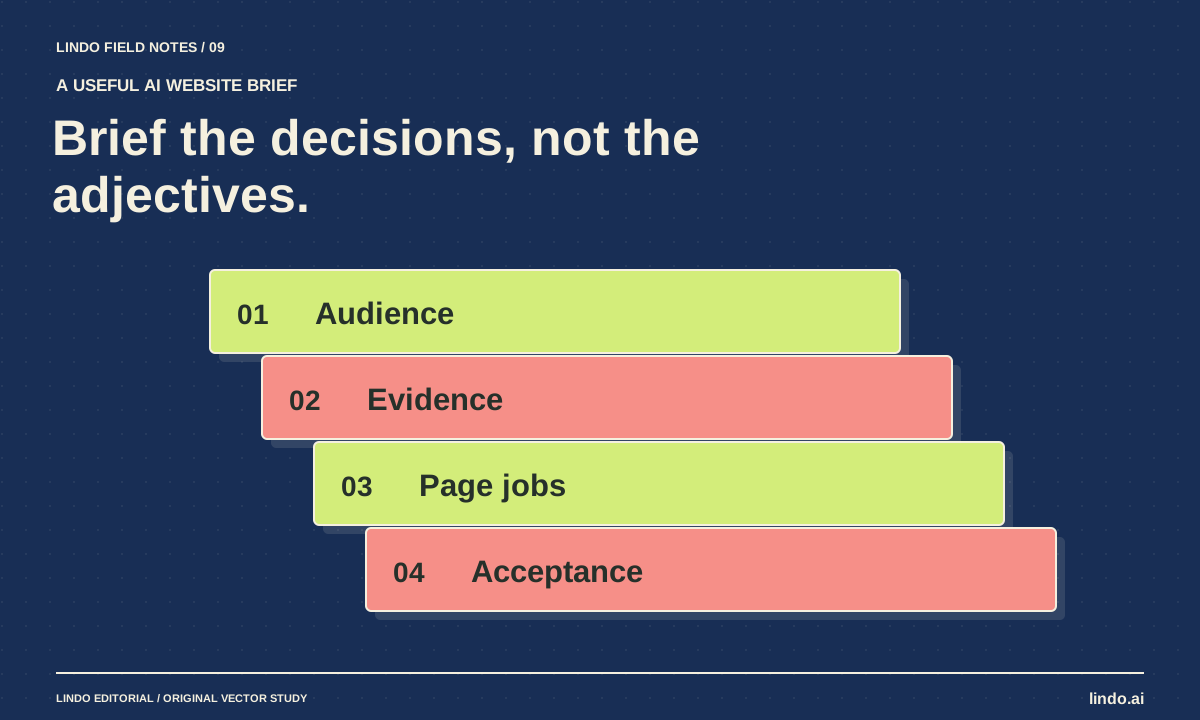
Replace vague website prompts with an approved brief covering audience, facts, page jobs, visual direction, and acceptance checks. Includes a copyable template.
Build with AI
How to Fix an AI-Generated Website Without Starting Over
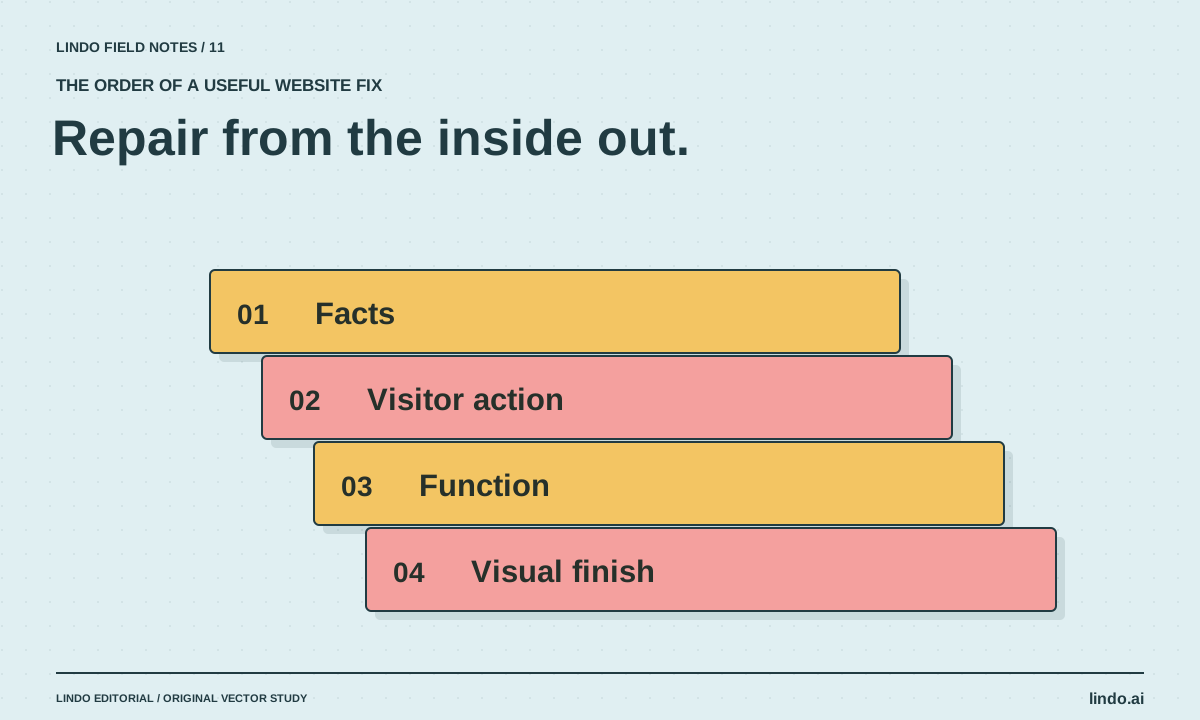
Diagnose weak AI website drafts in the right order: facts, visitor journey, functionality, layout, and visual polish. Includes a focused repair prompt.