
Creative workflows • Lindo field notes
Turn a Client Interview into Website Copy People Can Actually Use
Ask better client questions, extract specific evidence, and turn an interview into clear service copy without manufacturing testimonials or promises.
The short answer
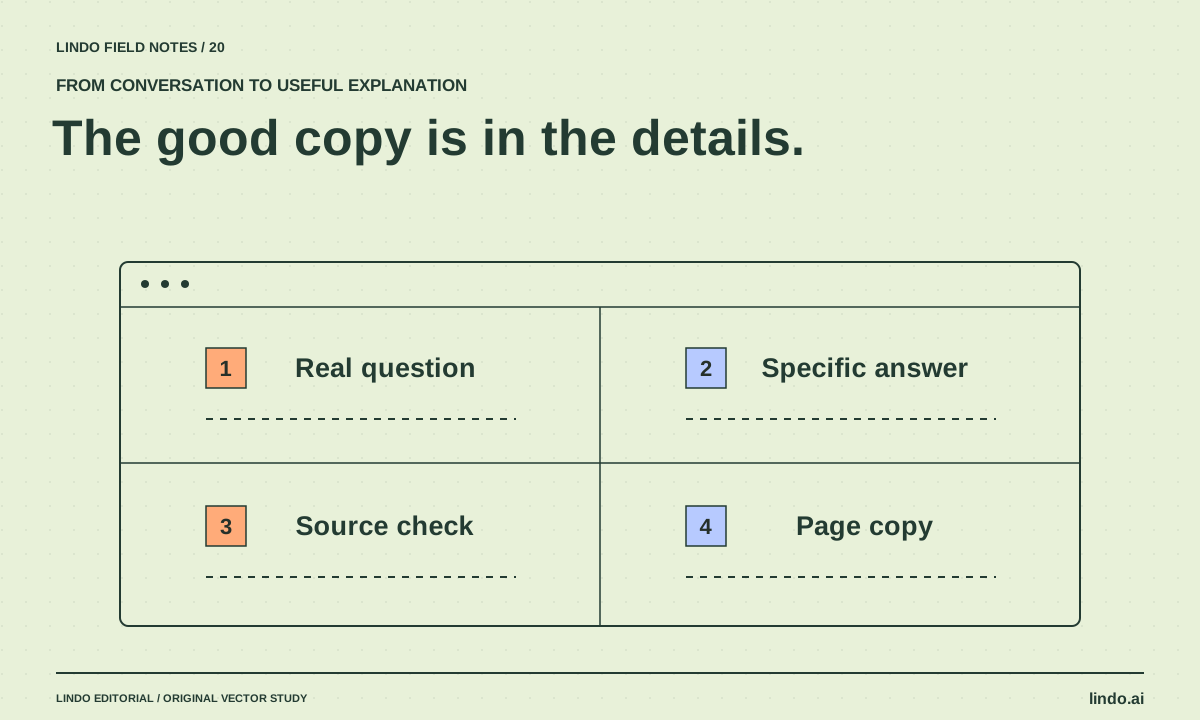
Interview the client about real decisions, processes, and customer questions. Extract factual statements with source notes, group them by page purpose, and draft from those details. Let the client verify the claims before polishing the voice. AI should help organize the interview, not turn uncertain remarks into confident promises.
In this article
The most useful website sentence is often buried in a casual explanation: “We inspect the wall before quoting because old plaster can change the job.” That tells a customer more than a page full of “quality craftsmanship” and “tailored solutions.”
A good interview gives you the details competitors cannot simply swap into their own copy. The aim is not to capture the founder’s whole life story. It is to understand what the business does, how a customer decides, and what evidence supports the offer.
FIELD NOTE / 01
Ask about moments, not adjectives
Avoid opening with “What makes you unique?” It often produces broad claims. Ask about the last difficult estimate, the question customers ask twice, or the job the business declines. Those examples reveal scope and judgment.
Ask permission before recording, explain how the material will be used, and avoid collecting unnecessary private customer details. An anonymized description can preserve the useful lesson without exposing someone’s identity.
- What does a customer need to tell you before you can give a useful answer?
- What is included that customers often assume costs extra?
- What do people expect you to do that you do not offer?
- What happens between the first inquiry and the work starting?
- Which claim on the current site is difficult to explain or support?
FIELD NOTE / 02
Separate facts, examples, and opinions
After the interview, create a claim ledger. A fact might be the service area. An example might illustrate a common constraint. An opinion might be the owner’s view of what customers value. They should not all become public statements with the same certainty.
If the client says “we are probably the fastest,” ask what evidence would support that comparison. If none exists, describe the actual response process instead. Specific operational information is often more persuasive than an unsupported superlative.
FIELD NOTE / 03
Map details to the reader’s next question
Use the interview to answer page-level questions: who the service is for, what it includes, how it works, what affects the estimate, and what to do next. Do not place every interesting anecdote on the homepage.
A process detail may belong next to the inquiry form because it explains why a field is required. A limitation may belong on the service page because it helps visitors self-qualify. Context makes the same sentence more useful than a generic “why choose us” list.
FIELD NOTE / 04
Draft with source notes still attached
Ask AI to produce concise copy and identify the source for each factual claim. Keep uncertain material as editorial questions. Review the draft for omissions as well as inventions: a pleasant summary may remove the very constraint that made the service understandable.
Then read the copy aloud. Remove phrases the client would never say unless they serve a clear purpose. Preserve the client’s direct explanations without pretending every edited sentence is a verbatim quote. Use quotation marks only for words that were actually said and approved for quotation.
FIELD NOTE / 05
Approve meaning before tone
Ask the responsible person to check scope, availability, process, and evidence first. After those are settled, refine rhythm and length. This prevents an elegant draft from making factual review feel like an obstacle to completion.
Finally, review the wording inside the page. A clear process paragraph can still become unreadable in a narrow card. Use the website-copy tool evaluation if you are choosing an assistant, and keep the approved interview facts in the project’s context pack for future edits.
Take it into your next project
Interview-to-copy extraction prompt
Use a transcript you have permission to process. Remove personal information unrelated to the website.
Extract website material from this interview.
Return a table: source passage, factual claim, visitor question answered, proposed page, approval needed.
Separate current facts from future plans, opinions, and anecdotes.
Do not invent customer names, testimonials, outcomes, or guarantees.
Draft one service explanation and one process section using only supported claims.
Preserve meaningful limitations.
List unanswered questions before suggesting additional copy.
Do not present edited paraphrases as verbatim quotations.
Common questions
Can I turn a client story into a case study?
Only with accurate details and appropriate permission. An anecdote may inform copy, but it is not automatically an approved customer case study or testimonial.
What if the client has no dramatic differentiator?
Explain the service clearly: fit, scope, process, constraints, and next steps. Useful specificity does not require claiming that the business is unique in the market.
Sources & further reading
Vendor links support product descriptions. Worked examples, checklists, and selection criteria are Lindo’s editorial guidance; they are not customer results or controlled benchmarks.
Better business websites
How to Collect Website Content from Clients Without Endless Follow-Ups
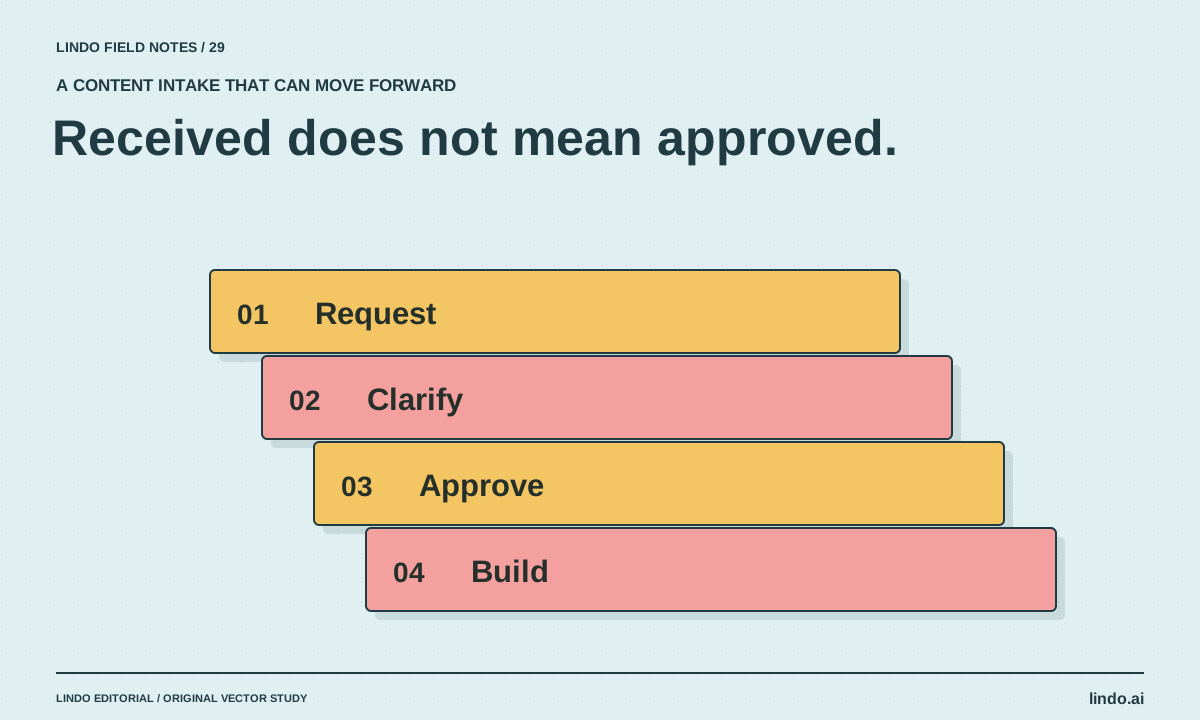
Use a page-based content request, named owners, approval status, and a launch-gap list to gather website copy and assets efficiently.
Build with AI
How to Turn Messy Client Notes into a Website Plan
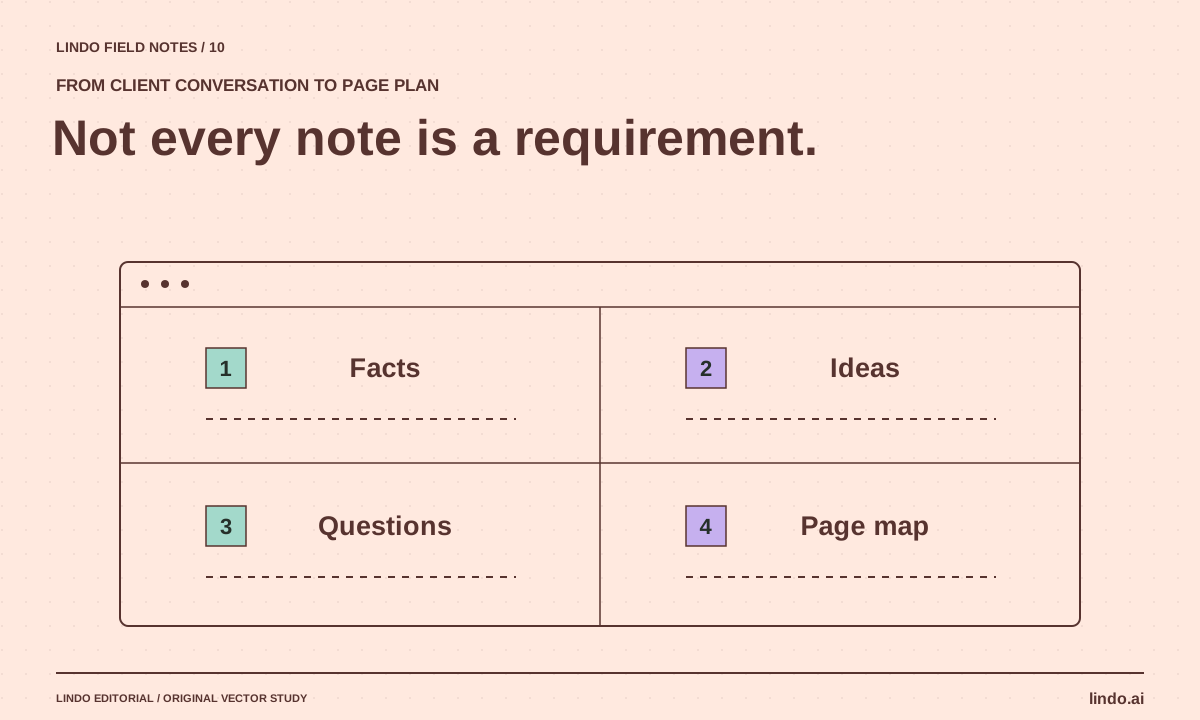
Convert calls, emails, and documents into an approved sitemap and content plan without turning every client idea into a new page.
Choose your tools
Best AI Tools for Website Copy: Choose a Writing Workflow, Not a Word Factory
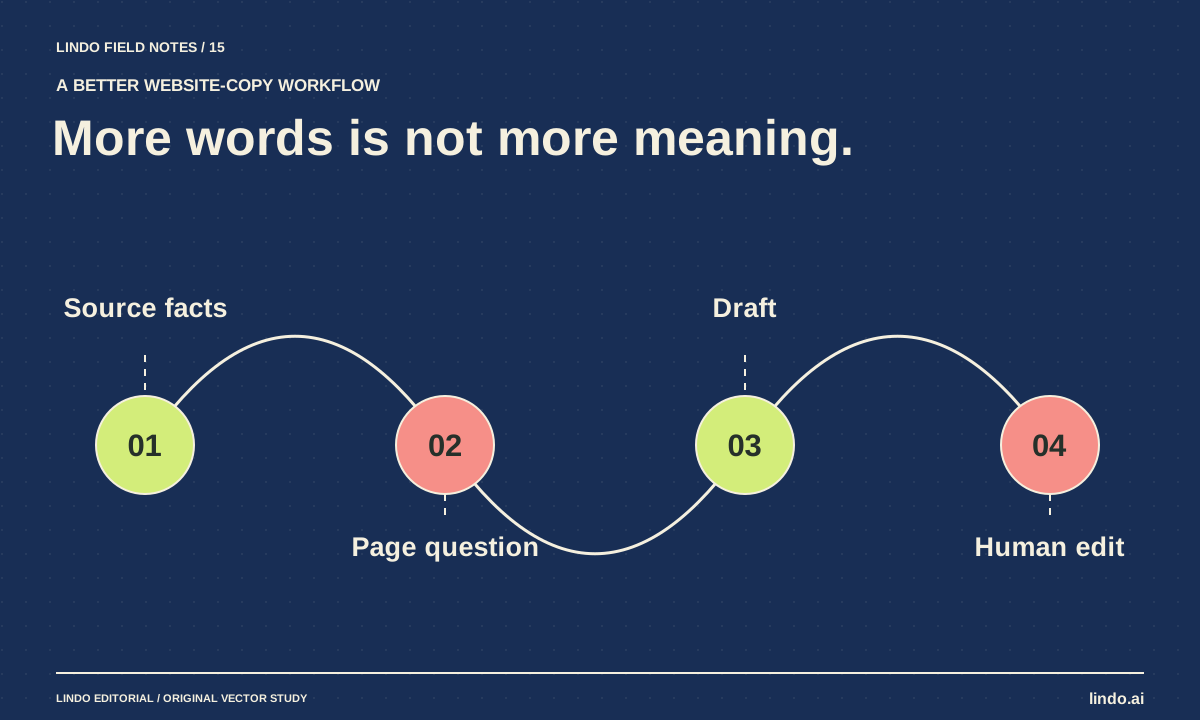
Evaluate ChatGPT, Claude, and Jasper for website copy using approved facts, page intent, brand voice, and a common editing test.