
Better business websites • Lindo field notes
How to Audit a Competitor’s Website Without Copying It
Study public competitor websites for unanswered customer questions, content structure, and useful evidence—without inventing traffic estimates or copying assets.
The short answer
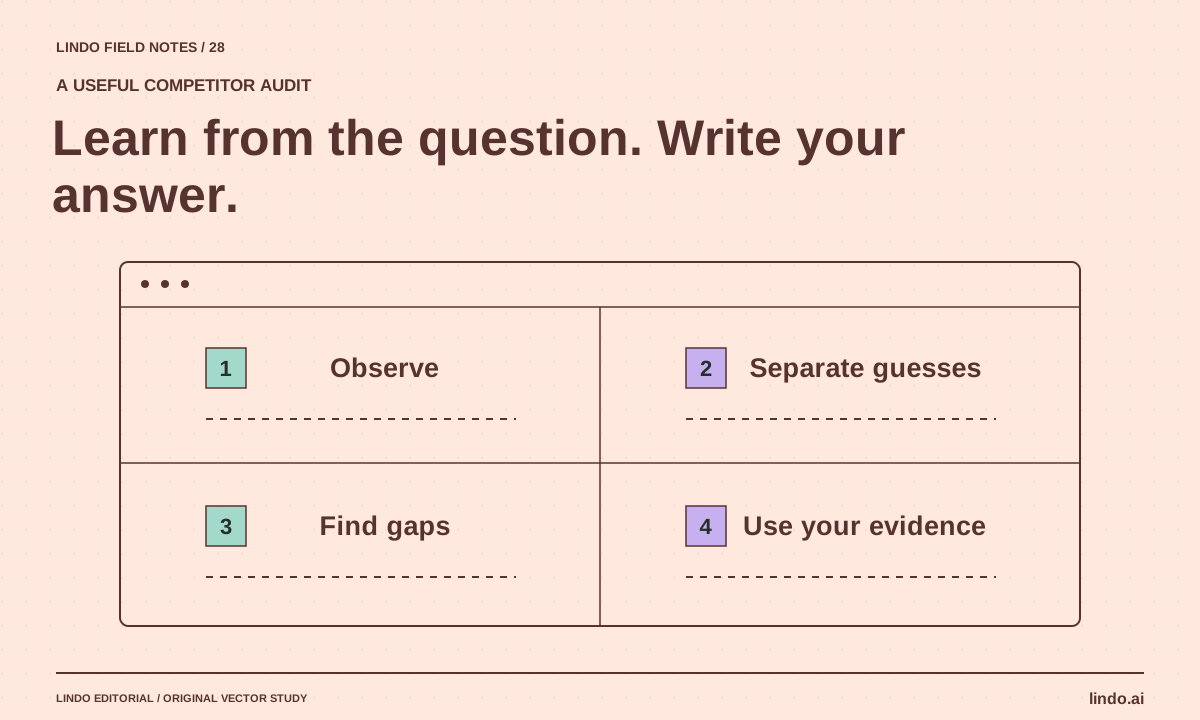
Audit competitors by the customer decisions their websites support: offer clarity, service scope, proof, practical questions, and next actions. Record observations separately from hypotheses. Use the findings to improve your own explanation, not to copy their copy, assets, or unsupported claims about performance.
In this article
Competitor research can improve a website brief—or turn it into a collage of other companies’ choices. The difference is the question you ask. “What should we copy?” produces imitation. “What does a customer still need to understand?” produces useful work.
Public pages reveal how a business presents itself. They do not reveal its conversion rate, profitability, or private search traffic. This guide keeps the audit within what you can actually observe and turns it into an original content plan.
FIELD NOTE / 01
Choose competitors for a reason
Select a small set with different relevance: a direct local competitor, a business with a similar offer, and perhaps a strong example of the same customer task in another market. Explain why each is included.
Do not fill a spreadsheet with dozens of sites simply because AI can summarize them. Three careful reviews can reveal more than thirty generic descriptions. Include your own site in the same evaluation so the comparison is not automatically flattering.
FIELD NOTE / 02
Review the same visitor questions on every site
Use a consistent task list: identify the offer, understand fit, find scope and limitations, inspect proof, and take the next step. Record the page and the exact observation. If a detail is absent, say you did not find it during the review rather than declaring it nonexistent everywhere.
| Question | What to record | What not to infer |
|---|---|---|
| Who is the service for? | Audience and offer wording | Actual customer demographics |
| What is included? | Visible scope and exclusions | The full private sales process |
| What supports the claim? | Published examples and evidence | Whether every claimed result is independently verified |
| How does a visitor act? | Visible contact or booking path | The site’s conversion rate |
| What is hard to understand? | Observed friction and missing answers | Revenue lost because of it |
FIELD NOTE / 03
Separate observations from hypotheses
“The menu is available only as a small image in this view” is an observation. “Guests may struggle to read it on a phone” is a hypothesis you can investigate. “The restaurant loses thousands each month” is an unsupported business claim.
Use screenshots or notes responsibly and keep the review focused. Do not bypass access restrictions, collect private customer data, or submit unsolicited test inquiries through competitors’ forms. You can inspect a public journey without creating work for another business.
FIELD NOTE / 04
Turn findings into your own content decisions
Suppose several competitors describe “full-service support” without explaining response steps. Your opportunity is to describe your actual process clearly, if the business can support it. It is not to publish a louder version of the same vague claim.
Build an evidence backlog: facts to confirm, examples to obtain, process details to explain, and questions to answer. Use your own images and wording. A competitor’s structure can suggest a customer question, but your answer should come from your business’s real work.
FIELD NOTE / 05
Prioritize by customer importance and evidence available
Choose improvements that help a meaningful decision and can be supported now. A clear service boundary may be more useful than a new comparison page. If a topic requires expertise or evidence you do not have, gather it before publishing.
Revisit the audit after changes and test your own page with someone unfamiliar with the business. Google’s SEO starter guide provides a baseline for discoverable content, but competitor imitation is not a ranking strategy. The purpose is a better explanation of your own offer.
Take it into your next project
Competitor review prompt
Provide public URLs or permitted notes. Require source links and keep private performance claims out of the output.
Review these public pages against the same customer questions.
For each observation include the page URL and what was visible.
Separate observed facts from hypotheses.
Do not infer private traffic, conversion rates, revenue, or customer data.
Do not copy text, images, or branding.
Return:
- Offer and audience clarity
- Scope and limitations
- Evidence supporting claims
- Next action and visible friction
- Unanswered customer questions
- Original improvements we could make using our own evidence
- Facts we must gather before publishing
Common questions
Can AI estimate a competitor’s traffic from its website?
Not reliably from page content alone. Third-party estimates also have limitations. Do not present guesses as measured analytics.
Is using the same page structure copying?
Common structures can be appropriate, but your content, assets, and decisions should serve your own audience and evidence. Avoid reproducing distinctive expression or identity.
Sources & further reading
Vendor links support product descriptions. Worked examples, checklists, and selection criteria are Lindo’s editorial guidance; they are not customer results or controlled benchmarks.
Better business websites
How to Tell If a Business Needs a New Website—or Just a Few Repairs
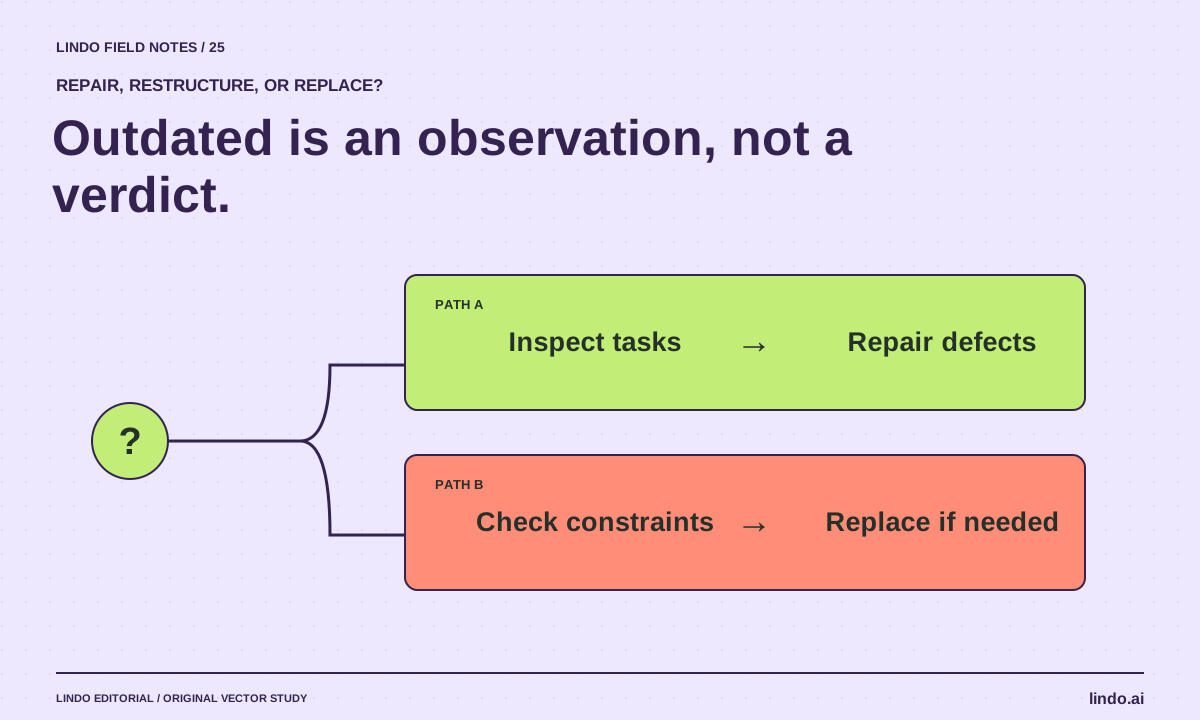
Audit an outdated-looking business website using visitor tasks, content accuracy, forms, and maintenance needs before recommending a rebuild.
Creative workflows
How to Make AI Websites Look Less Generic
Replace default hero-and-card layouts with a clear editorial idea, distinctive evidence, varied section rhythms, and useful original visuals.
Build with AI
How to Write a Website Brief for AI That Produces a Useful First Draft
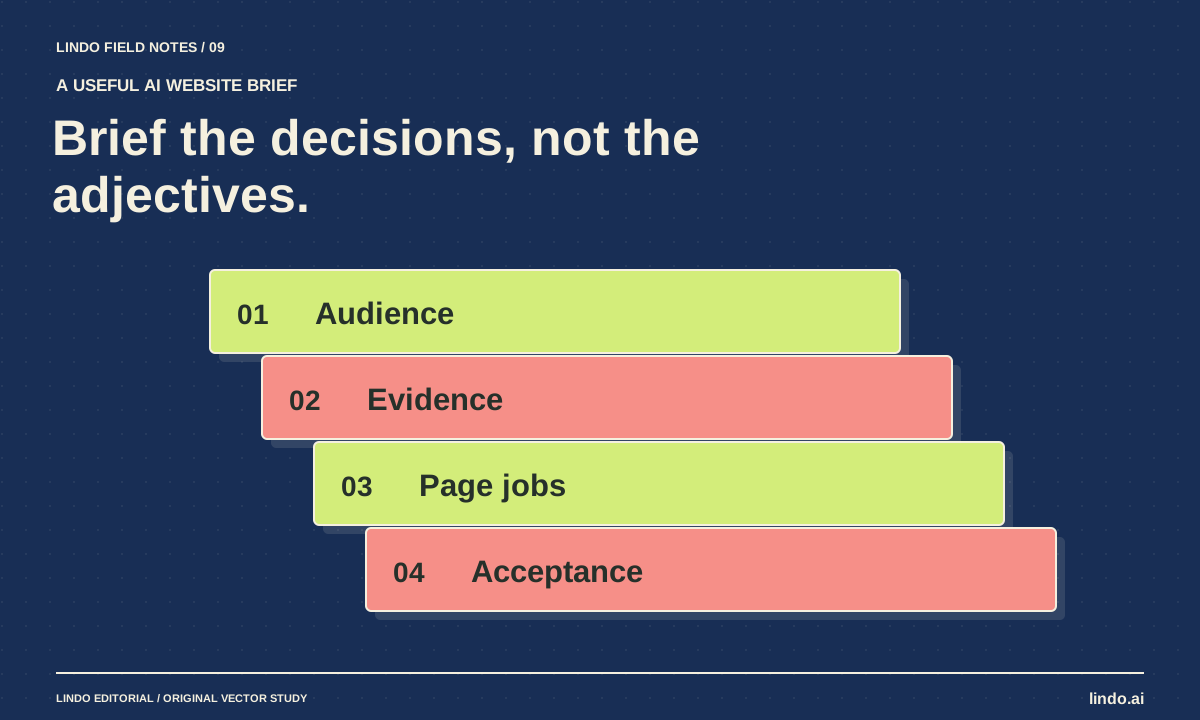
Replace vague website prompts with an approved brief covering audience, facts, page jobs, visual direction, and acceptance checks. Includes a copyable template.